|
|
|---|
Click here to go to The Year Grid
A broad brush outline of the War
The Crimean War (1853-1856)
was a conflict fought between the Russian Empire and an alliance of the
Ottoman Empire, France, Britain, and Sardinia.
The primary causes of the war were complex and included religious tensions,
territorial disputes, and the desire to control access to the Black Sea.
Causes:
Religious Tensions:There were longstanding tensions between Roman Catholics,
Orthodox Christians, and Muslims in the region.
Territorial Disputes: Russia sought to expand its influence in the declining Ottoman Empire,
leading to disputes over control of holy sites in Jerusalem and other territories.
Britain's Involvement:
Britain joined the war as part of a coalition with France and the Ottoman Empire against Russia.
The primary concern for Britain was to prevent Russian expansion in the region,
which could threaten British interests in the Eastern Mediterranean and the route to India.
Major Events:
The Battle of the
Alma takes place.
The Allies defeat the Russian forces and continue their advance towards Sevastopol.
Battle of Balaclava: Famous for the Charge of the Light Brigade,
a British cavalry charge immortalized in poetry by Alfred, Lord Tennyson.
Siege of Sevastopol: A prolonged siege where British, French,
and Ottoman forces aimed to capture the strategically important Russian naval base.
The Battle of Inkerman is fought. Allied forces repel a Russian attack during
a fierce battle in foggy conditions.
Outcome:
The war ended with the Treaty of Paris in 1856, which aimed to restore the balance of power in
Europe and limit Russian influence in the Black Sea.
The Ottoman Empire was preserved, and Russia gave up some territory.
The war had significant impacts on military medicine,
with Florence Nightingale gaining fame for her nursing efforts.
British Losses:
The Crimean War is notable for its high casualties due to poor medical facilities and practices.
The majority of British deaths were caused by diseases such as cholera and typhus rather than direct combat.
Approximately 21,000 British soldiers died during the war.
While the war did achieve its immediate goals, the significant loss of life and the poor conditions
faced by soldiers highlighted the need for military and medical reforms in the years that followed.
The war had a lasting impact on the British military and contributed to reforms in areas such as
military administration and healthcare.
1853
A more detailed outline - many more images will be coming
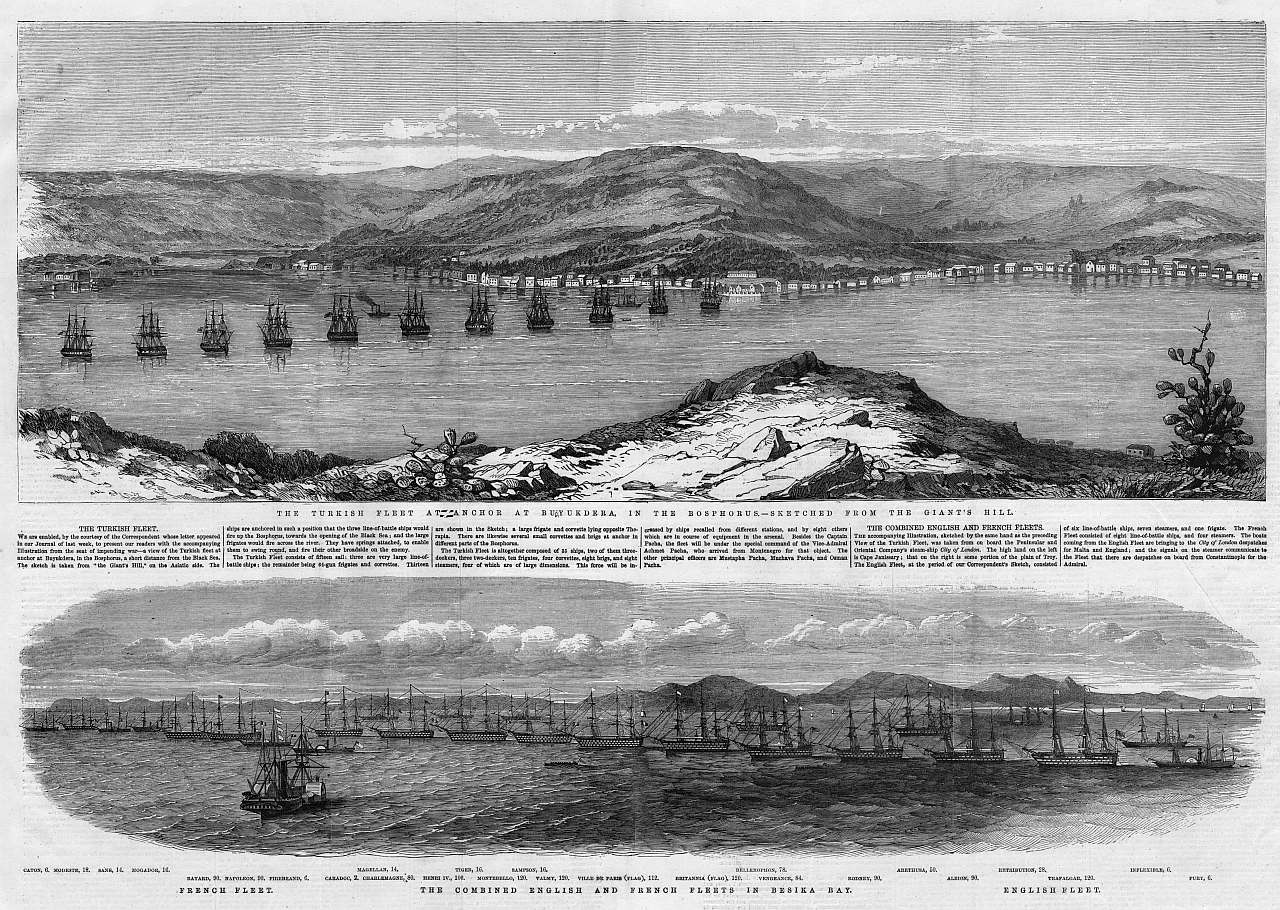
July 1853- Russian troops occupied the Danubian Principalities (Moldavia and Wallachia),
territories under Ottoman sovereignty.
This act heightened tensions between the Russian and Ottoman Empires.
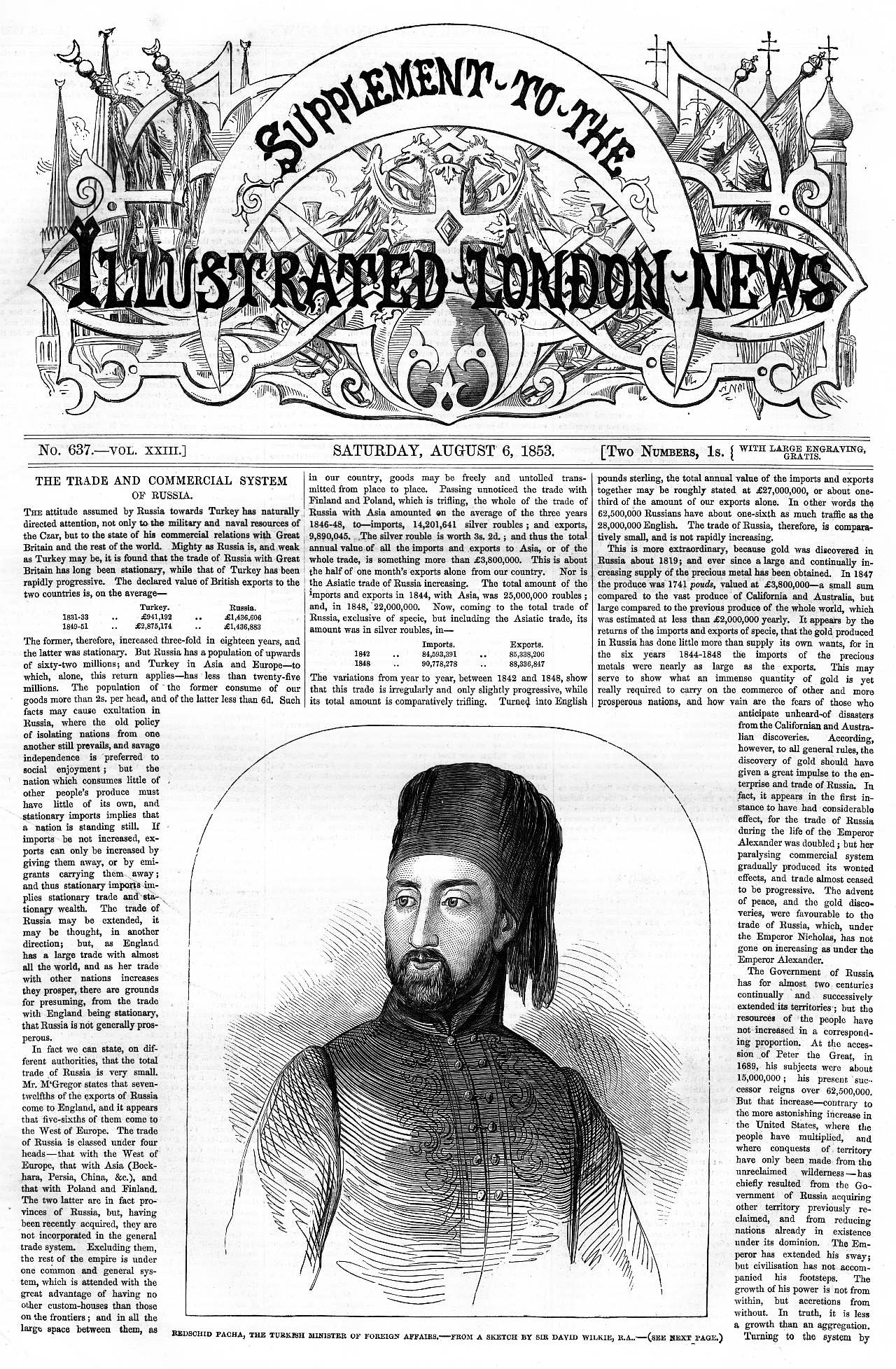
July 2, 1853- The Ottoman Empire, under pressure, ordered the withdrawal of Russian troops
from the Danubian Principalities, which Russia refused.

October 4, 1853- The Ottoman Empire officially declared war on Russia after diplomatic efforts to resolve the crisis failed.
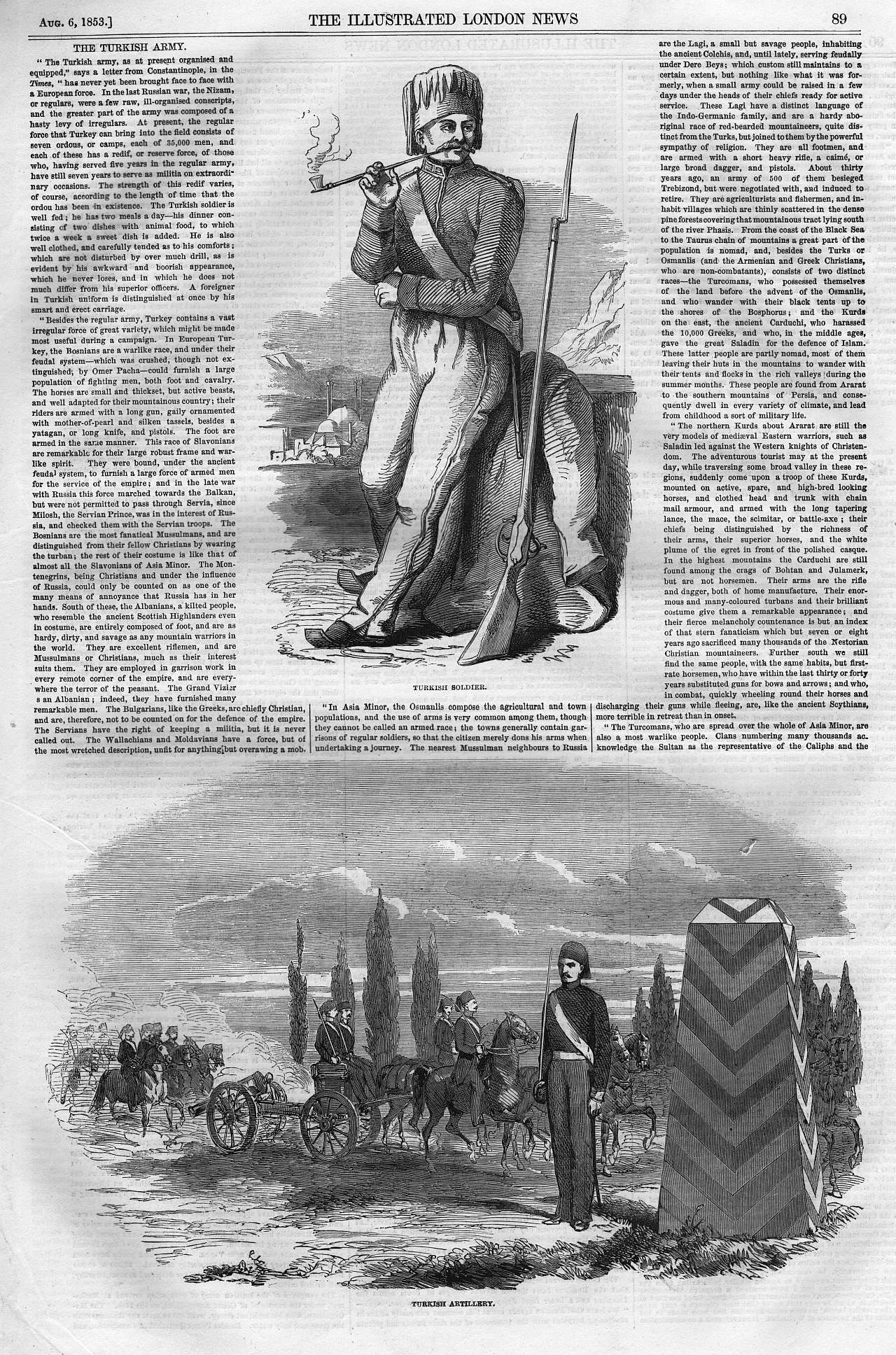
October 23, 1853- The first significant military engagement of the war occurred with the naval Battle of Oltenitza
between Ottoman and Russian forces on the Danube.

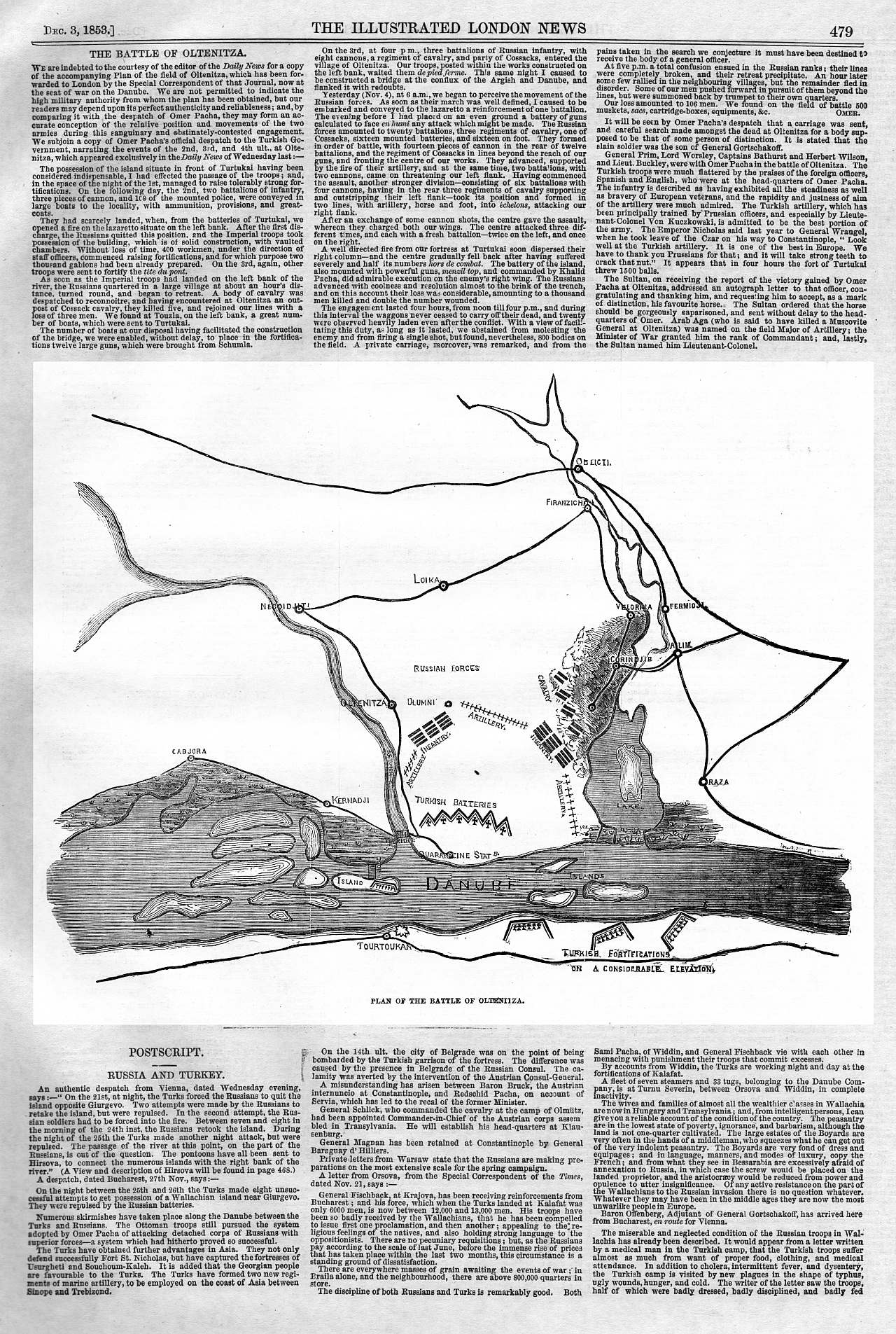
November 30, 1853-The Russian fleet defeated the Ottoman fleet at the Battle of Sinop in the Black Sea.
This naval victory led to calls for intervention from Britain and France.
December 1853- After the Russian victory at the Battle of Sinop (November 30, 1853),
Britain and France became increasingly concerned about Russian expansion.
This naval battle highlighted the growing Russian threat in the region and brought
British and French public opinion in favour of intervention.
January 1854- Diplomacy continued between the European powers, particularly Britain and France,
as they attempted to negotiate a settlement to the crisis.
However, tensions remained high, and preparations for war were underway.
February 27, 1854- Britain and France sent an ultimatum to Russia,
demanding that Russian troops withdraw from the Danubian Principalities.
Russia refused to comply with the ultimatum.
March 12, 1854- Britain and France formed a military alliance
with the Ottoman Empire to confront Russia, signaling the inevitability of war.
March 27-28, 1854- Britain (March 27) and France (March 28)
officially declared war on Russia, marking the start of their direct involvement in the Crimean War.
April - August 1854: Naval Operations in the Baltic –
The British and French fleets carried out a blockade and various bombardments against Russian positions in the Baltic Sea.
This front, though secondary to Crimea, was aimed at weakening Russian power and tying up their naval forces.
Some engagements, like the bombardment of Bomarsund (August 1854), were part of this.
May 1854: Austrian Diplomatic Maneuvering –
Austria took a more active diplomatic role, pressuring Russia to withdraw from the Danubian Principalities (modern-day Romania)
and threatening to join the war on the side of the Allies if Russia did not comply.
This led to Russia's withdrawal from those territories, reducing Austria's need to enter the war militarily.
June 1854: Health Issues and Logistics –
The Anglo-French forces faced issues with diseases, particularly cholera, in their camps at Varna and Gallipoli.
Poor sanitary conditions led to heavy casualties before the troops even arrived in Crimea.
July 1854: Anglo-French Preparations –
British and French forces began gathering in Ottoman territories (notably Gallipoli and Varna) in preparation for operations in Crimea.
The forces spent months organizing and dealing with logistical challenges before embarking for Crimea in September.
August 1854: Allied Command Decisions –
Commanders Lord Raglan (British) and Marshal Saint-Arnaud (French) made final decisions to invade
Crimea after concluding that the Russian presence there could only be broken by attacking the naval base at Sevastopol.
September 14, 1854- Allied troops (British, French, and Ottoman) land at Eupatoria on the western coast of Crimea.
September 19, 1854 – The Allies begin their march towards Sevastopol, Russia's key naval base on the Black Sea.
September 20, 1854 – The Battle of the Alma takes place. The Allies defeat the Russian forces and continue their advance towards Sevastopol.
October 17, 1854 – The Allies launch their first bombardment of Sevastopol, starting the Siege of Sevastopol.
October 25, 1854– The Battle of Balaclava occurs, where the famous Charge of the Light Brigade takes place.
November 5, 1854– The **Battle of Inkerman** is fought. Allied forces repel a Russian attack during a fierce battle in foggy conditions.
November 14, 1854– A severe storm in the Black Sea causes significant damage to the Allied fleet
and supply lines, affecting the ongoing siege efforts.
Following the devastating storm on November 14, 1854,
which caused significant damage to Allied supply lines and ships in the Black Sea,
a series of important events unfolded as the Crimean War continued:
Late November 1854: After the storm, the Allies, particularly the British,
faced severe logistical problems. The loss of supplies and deteriorating conditions
contributed to the suffering of troops during the winter.
Poor planning, harsh weather, and inadequate provisions left
soldiers in desperate need of food, clothing, and shelter.
Winter of 1854-1855: The winter months saw the troops in appalling conditions.
This period became infamous for the hardships endured by the soldiers,
particularly in the British camp.
Disease and exposure took a heavy toll, leading to more casualties than the actual fighting.
Florence Nightingale and the Reform of Military Hospitals (December 1854 - early 1855):
In response to reports of poor conditions in military hospitals,
Florence Nightingale arrived in Scutari, near Constantinople (modern-day Istanbul),
in November 1854. She and her team worked to improve sanitation
and care for the wounded, ultimately revolutionising nursing practices
and gaining widespread recognition for her efforts during this time.
The Siege of Sevastopol (Ongoing): Despite the storm and logistical challenges,
the siege of Sevastopol continued through the winter of 1854-1855.
The city remained under constant bombardment by Allied forces,
but Russian defenders held firm in their fortified positions.
January 1855: As the war dragged on, public dissatisfaction grew in Britain
over the mismanagement of the campaign, leading to the resignation of British Prime Minister
Lord Aberdeen. He was succeeded by Lord
Palmerston,
who promised to improve the conditions for the troops and push forward with the war effort.
February 1855: Tsar Nicholas I of Russia died on March 2, 1855.
His death marked a significant shift in Russian leadership as his son,
Alexander II, took the throne. The new Tsar faced the challenge of continuing the war amidst mounting difficulties.
March 1855: The Allied forces began reorganising their efforts to renew the siege of Sevastopol
with greater force, preparing for another major assault on the Russian stronghold.
The months following the November storm were characterized by a brutal winter
and the struggle to maintain the war effort under dire conditions.
However, despite these hardships, the war continued well into 1855 before a decisive resolution was reached.
After March 1855, the Crimean War continued with significant developments
as the Allies intensified their efforts to capture Sevastopol and
Russia faced mounting difficulties.
Spring to Summer 1855
Renewed Siege of Sevastopol:
Following the winter of 1854-1855, the Allies (British, French, and Ottoman forces)
resumed their siege of Sevastopol with renewed vigour.
In March and April, both sides launched various attacks,
but the siege remained a stalemate for several months.
The city was heavily fortified by Russian forces and withstood repeated bombardments and assaults.
Battle of the Chernaya River (August 16, 1855)
One of the major battles of 1855 occurred on August 16.
Russian forces attempted to break the siege by attacking the Allied positions
along the Chernaya River. However, the attack was repelled by the French
and Sardinian forces, resulting in heavy Russian losses.
This defeat further weakened Russian morale.
Fall of Sevastopol (September 8, 1855)
After months of intense fighting, the Allies successfully breached the Russian defences.
French forces captured the key position of Malakoff on September 8,
effectively signaling the fall of Sevastopol.
The Russians evacuated the city, and the Allies took control of the southern part of Sevastopol.
Although the war was not immediately over, the fall of
Sevastopol marked a decisive turning point in favour of the Allies.
Late 1855
Further Fighting:
Despite the fall of Sevastopol, fighting continued in other parts of the Crimea and around the Black Sea.
Both sides attempted to regroup, and smaller skirmishes took place.
However, the loss of Sevastopol was a severe blow to Russia's ability to continue the war effectively.
Late 1855 - Early 1856
Negotiations and Armistice
With Russia facing increasing military pressure and the death of Tsar Nicholas I in March 1855
(he was succeeded by Alexander II), peace negotiations gained momentum.
France, Britain, and Austria pressured Russia to agree to terms that would bring an end to the conflict.
Diplomats from the belligerent nations began negotiating in Paris, and these discussions
laid the groundwork for an eventual peace agreement.
1856 March 30
Treaty of Paris
The Crimean War officially ended with the signing of the Treaty of Paris on March 30, 1856.
Key provisions of the treaty included the neutralization of the Black Sea
(Russia was forbidden to maintain a navy or military fortifications there),
the return of territories, and the protection of Christian minorities within the Ottoman Empire.
The treaty restored a balance of power in Europe and brought a temporary halt to Russian expansion in the region.
Click here to go to The Year Grid