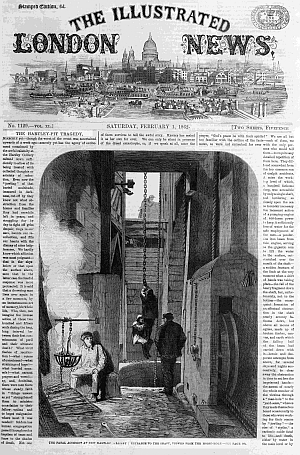
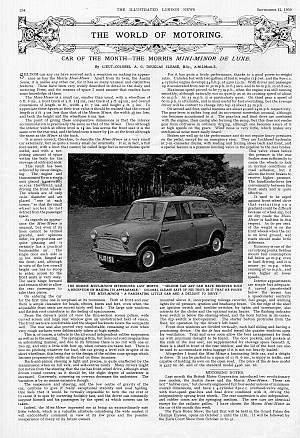
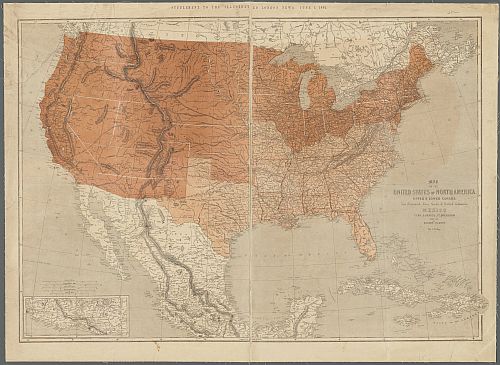
Welcome to my Digital Museum of Illustrated News
which is based mainly on my collection of
original copies of the worlds first Illustrated Newspaper
The Illustrated London News Year Grid
Welcome to my Illustrated London News Archive
Explore digitised reports and engravings from the Illustrated London News, covering world events from 1842 onwards. The site is free to browse and is part of an ongoing project to share this remarkable record of history.
Selected Features
reported in the pages of The Illustrated London News.
Interactive Map of Shipwrecks in the British Isles 1868
This website is completely free to use—no charges, no subscriptions, no catch.
If you find it helpful or enjoyable, and if it’s within your means,
please consider making a donation to the NSPCC to support their work protecting children.
Your generosity is entirely optional—your experience here will remain free no matter what.
You can also fundraise for the NSPCC and get a free pack of tips and materials.
Donate to the NSPCCSearch Website
|
|
|---|
This website is completely free to use—no charges, no subscriptions, no catch.
If you find it helpful or enjoyable, and if it’s within your means, please consider making a donation to the NSPCC to support their work protecting children.
Your generosity is entirely optional—your experience here will remain free no matter what.
You can also fundraise for the NSPCC and get a free pack of tips and materials.
National Society for the Prevention of Cruelty to Children
|
|
|---|
Welcome to my Digital Museum of Illustrated News
which is based mainly on my collection of
original copies the worlds first Illustrated Newspaper
The Illustrated London News
A source of Historical Illustrated News
The Illustrated London News was a weekly illustrated newspaper that ran from 1842 to 2003, although turning monthly from 1971,
providing a fascinating glimpse into the social and cultural history of Britain and beyond.
With its detailed illustrations and informative articles, the ILN was a pioneering publication that captured the imagination
of Victorian readers and generations thereafter. On this website you will find a wealth of information about the ILN,
including its history, notable contributors, and featured articles. Join me as I explore
the legacy of this iconic publication and discover the stories it has to tell.
The Early days of the Illustrated London News
A short History of the Illustrated London News
The Illustrated London News (ILN) serves as a rich repository of diverse subject matter
spanning the 19th and 20th centuries,
rendering it an invaluable asset for multidisciplinary research. Its coverage encompasses:
The Arts: ILN portrays key figures in opera, vaudeville,
painting, and theatre from the 19th and 20th centuries.
Discovery and Exploration: Illustrated adventures of explorers like
Livingstone, Stanley, and Scott bring exploration to life.
Fashion: ILN traces the evolution of fashion,
from corsets to flapper dresses, through its unique visual narratives.
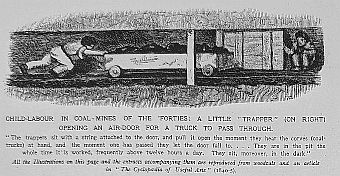
Industry and Trade: Coverage of industrial growth, labour conditions,
trade, and agriculture offers a societal snapshot.
Military History: Visual documentation of conflicts,
from the Crimean War to World Wars, highlights historical warfare.
Politics: Fine illustrations depict Victorian statesmen
and major players in World Wars, providing political insights.
Science, Medicine, and Progress: Engaging engravings showcase
technological advancements and scientific breakthroughs.
Social History: ILN provides visual narratives of societal dynamics,
covering diverse topics like suffrage, crime, and leisure.
Sport: From mainstream sports to niche activities,
ILN captures the essence of sporting culture.
Transport: A comprehensive record of transportation milestones,
from steam omnibuses to historic flights, is depicted.
Travel: ILN offers global insights into people, places,
and cultures, spanning the British Empire and beyond.
Royalty: ILN followed the lives of the Royal family of the UK
and the world in engravings and photographs..
Opening of the
The Lancaster - Carlisle Railway 1846 as reported in
The Illustrated London News
Lancaster Castle Railway station 1846
(Sir William Tite was the architect of Lancaster station)
(Joseph Locke was the engineer who designed the route of the Lancaster to Carlisle Railway )
Visit the NEW "Tite & Locke" Pub on Lancaster Railway Station
Support the NSPCC
I maintain this website as a personal project to share historical discoveries and rare material from the Illustrated London News.
If you find this work valuable, I hope you’ll consider supporting the NSPCC — a UK charity doing vital work to protect children.
You can also Fund raise for the NSPCC and get a free pack of tips and materials here.
National Society for the Prevention of Cruelty to Children
(scroll a little further down for the Year Grid )
The Illustrated London News
was the first illustrated newspaper in the world,
it was published for
161 years from 1842–2003.
The Illustrated London News
It is thought to be
the finest pictorial example
and historic social record
of British and world events upto the early 21st Century
My collection is not quite the complete run of every ILN published but I have over 7000 of them
There are over 1,000 "long pages" of articles and images on my website
a small fraction of the ¼ of a million pages in more than 7,000 issues which
contains over 1,500,000 images
A glimpse into some of the
content of
The Illustrated london News
by year in the Victorian era
The Illustrated London News was first published in 1842
click on a year in the Year Grid
to discover some of the content
A glimpse into the content of
The Illustrated london News
by year in the 20th Century
"This website is completely free to use—no charges, no subscriptions, no catch.
If you find it helpful or enjoyable, and if it’s within your means,
please consider making a donation to the NSPCC to support their work protecting children.
Your generosity is entirely optional—your experience here will remain free no matter what."
search my website...
|
|
|---|
Useful links to Related Websites
The dictionaries defines a museum as "a building where objects of historical, scientific, or artistic interest are kept"
A Changing Understanding of “Museum”
Historical Perspective: Historically, the word “museum” has been linked to a physical building or location
in which objects of cultural, historical, or scientific interest are held and displayed.
This is why many dictionaries still reflect that earlier emphasis on a physical structure.-
Contemporary Definitions: Organizations such as the International Council of Museums (ICOM)
periodically update their definition to capture the broader purposes of museums.
Today, a museum is no longer solely about “a building” but is recognized as an institution that
“acquires, conserves, researches, communicates and exhibits” tangible and intangible heritage
for the purposes of education, study, and enjoyment. For example, ICOM’s current definition (adopted in 2022)
does not limit the concept to a physical building. Instead, it emphasizes the role of museums in “society”
and the range of activities they perform, many of which can happen in purely digital spaces.
Why “Virtual Museums” Exist
- Digital-Only Displays: With high-resolution imagery, 3D scanning, and interactive technologies,
it’s possible to document, preserve, and exhibit cultural and scientific artifacts entirely online. - Accessibility & Inclusion: Virtual museums offer global audiences an opportunity to experience
heritage and art without travel costs or physical barriers. - Experimental Formats: Digital museums can use VR, AR, or interactive storytelling to
create experiences not possible in a fixed physical gallery (e.g., going “inside” an artifact via 3D modeling).
Terminology in Flux
Though dictionaries often stick to the traditional notion of a “building,” museum studies experts,
professional associations, and many cultural organizations now use the term “museum”
to include virtual or hybrid institutions. These online museums still perform key “museum functions”—
collecting (digitally), researching, conserving (in digital formats), and sharing cultural content—
just without a permanent physical gallery.
So while you’re correct that many dictionaries define a museum as “a building,”
the professional field and emerging technology have expanded this concept, and the language
around it is evolving to match today’s reality.
Support the NSPCC
I maintain this website as a personal project to share historical discoveries and rare material from the Illustrated London News.
If you find this work valuable, I hope you’ll consider supporting the NSPCC — a UK charity doing vital work to protect children.
Illustrated London News |||Explore||| Child in the City ||| Facebook ||| Year Grid||| Contact John||| Please Donate to The NSPCC


small.jpg)