|
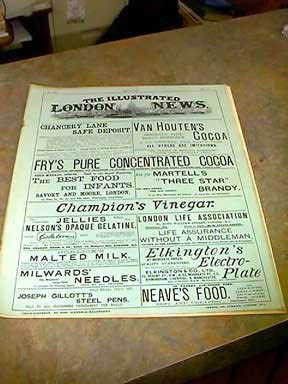
An article from The Summer Jubilee edition (above) of the Illustrated London News
about how this Illustrated Newspaper was produced on a day today basis
If you are remotely interested in printing this article is for you.
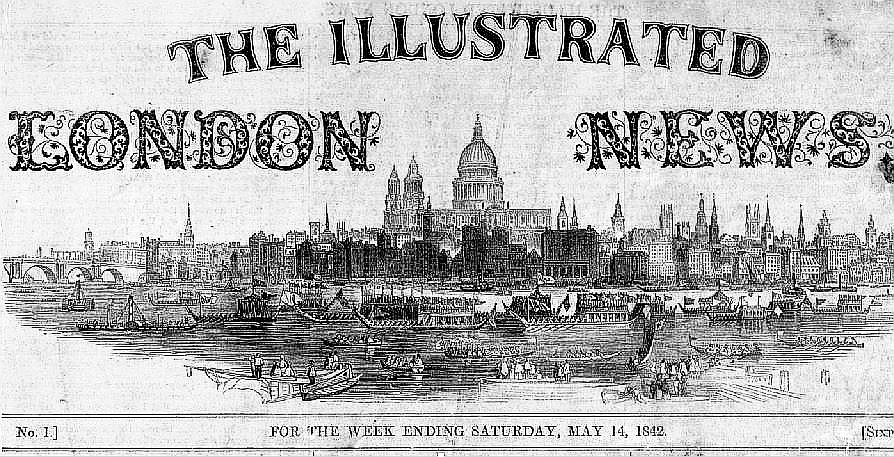
The Techniques of the modern Illustrated Newspaper - ILN Summer Jubilee number 1892.
Thus, in old pictorial journalism there was it must be admitted, a limited justification of it's name, a certain lack of sincerity and endeavour to do things "de chic" and little or no initiation. Today the establishment is of a different order, and no longer depends, even in part, upon the information in the daily press for it's principal enterprises- undertakings of the utmost importance, many of them, often involving the expenditure of many thousands of pounds.
Such an establishment is to be divided into two sections- the office and the outside staff. A glance at such an office will not be uninstructive. Entering by the side of the publishing office, the visitor passes through the store-rooms into the machine-room, where the halfdozen or so of printing presses specially adapted to cut printing, tended by their minders, are driven by one of a pair of steam or gas engines - a duplicate being kept in case of a breakdown.
Should it be practice of the office- as the fashion now tends to become - to print on damp paper with fairly hard "packing" on the printing machine, you will find a damping apparatus, somewhat resembling a shower-bath , in one part of the basement, while two or more calendering machines, for giving the paper a polished surface after the wetting it has received, are slowly revolving their polished cylinders between which the paper passes to receive the necessary pressure.
Mounting the stairs, the visitor passes the editorial offices, with which, for the moment he has nothing to do - where literary and art editors are likely enough, busily "making-up" next week's paper, seeing what shall go in and what stand over, or planning some new idea with which to please their readers and take the wind out of their rivals' sails.
Passing by the waiting room ( where two or three artists are probably waiting to deliver drawings which have been commissioned, or offer others that maybe acceptable before taking them elsewhere, he is conducted at once into the engravers' studio. It is only in one or two offices that this studio still exists, for it has been found that it is, on the whole, more practicable to employ one or more engraving firms "out" than to make economies which are liable to become extravagances, by employing one's own engravers under a head-engraver.
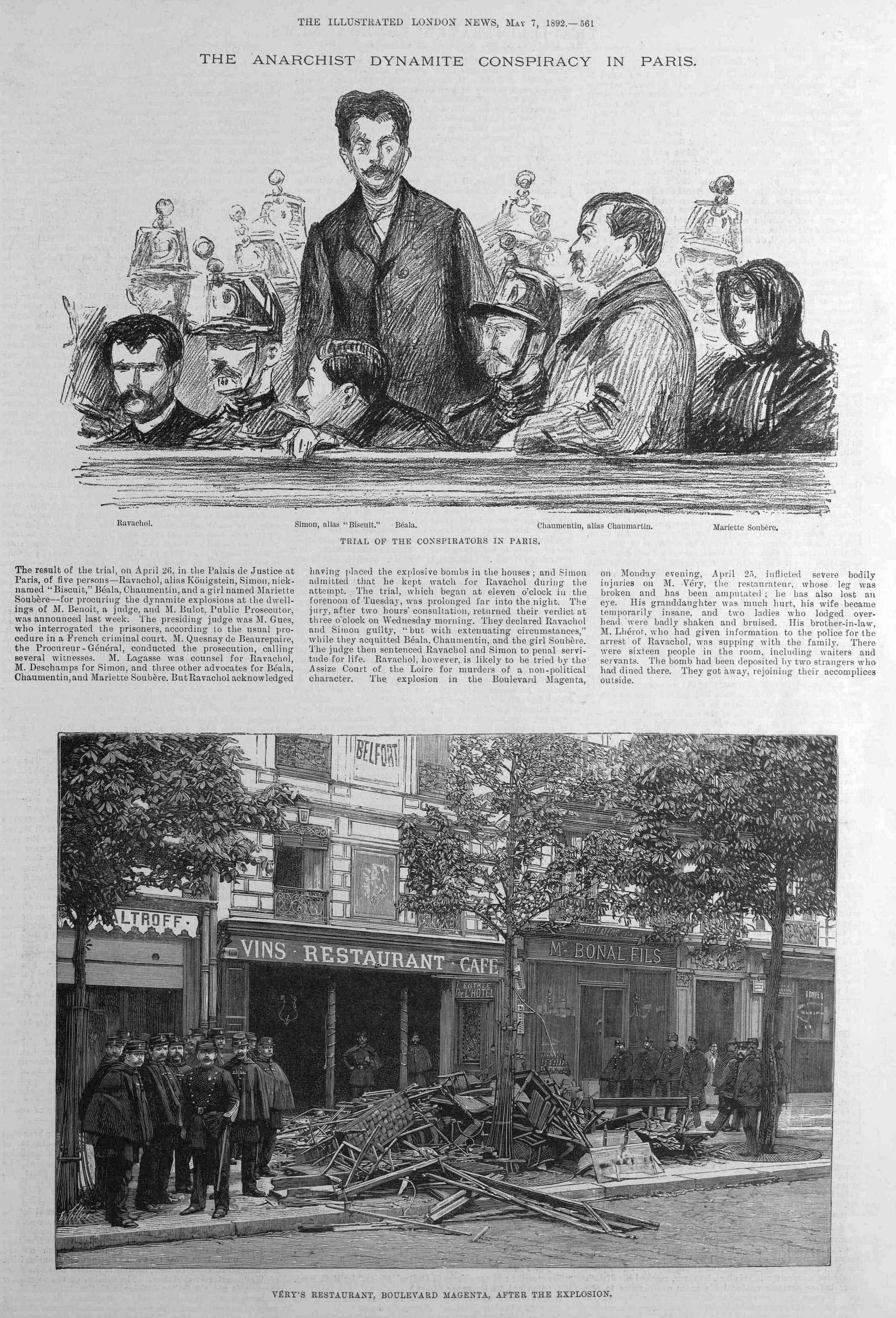
This studio is an interesting place. A dozen or twenty of the craftsmen are seated, three or four at each table, magnifying glass in eye, shade on forehead, engraving a block which they hold on a leather sand-bag, and on which through a bottle of bluish water the light of a gas jet is focussed. The original drawing, which was made on paper, has been photographed on a large woodblock. Of this the square sections have been unscrewed and distributed among the men, some of whom only cut the flat tints, while others, more advanced and better artists, engrave the parts in which they excel- drapery, foliage, hair, and flesh, the chief engraver himself usually engraving the heads. In this manner the best of each man's abilities is obtained, and I have known a large double page drawing of a highly important current event engraved in a short night - the drawing, coming in at midnight, made straight upon the block, as the couple of hours were lacking in which to have it photographed on the block even by electric light, and being sent upstairs to the electrotypers to be made into a block for printing.
Let the visitor now follow the block into that grimy department. Walking past the composing-room, where the "comps" are setting type for dear life, as their right arms were violently afflicted by St. Vitus, he enters an apartment where all is black, and where the odour of acid is all but over powering. A grimy person, shiny with contact with powdered lead, adjusts the wood block over a frame filled with a composition of wax, and, placing it in an hydraulic press, he applies the lever pump. The twenty ton pressure causes the block to leave a perfect reversed impression on the wax, which, powered with lead, is put into a "bath" for the precipitation of copper upon it, either by means of a battery or a dynamo - both methods being usually employed.
After two or three hours a copper crust has formed - an exact reproduction of the original engraving, and this has to be "backed-up" by running in type metal, to give it body and resistance. When this is done, the plate - for such it now is - is put into a lathe, whereby the superfluous metal is removed, and after being trimmed it is sent to be "touched-out". These "touchers-out" are, to express it Hiberically, wood-engravers on metal. Any fault in the reproduction has to be treated by their gravers and especially must they remove the tell-tale vertical and horizontal lines which betray the section lines of the original wood-block. And, further, should any mischance befall the block in the course of printing the toucher-out must go down, where the machine is stopped for him, and remedy the defect while the block is keyed up in the chases. Meantime, while the electro is being mounted on wood, to give it the same depth of the type with which it is to be printed, a careful proof has been "pulled" from the wood-block - and what is done with one is done with every engraving in the paper. This serves, subsequently, as guide to the printers as to the effect and quality that must be obtained from it when they are pressing the sheets through the press.
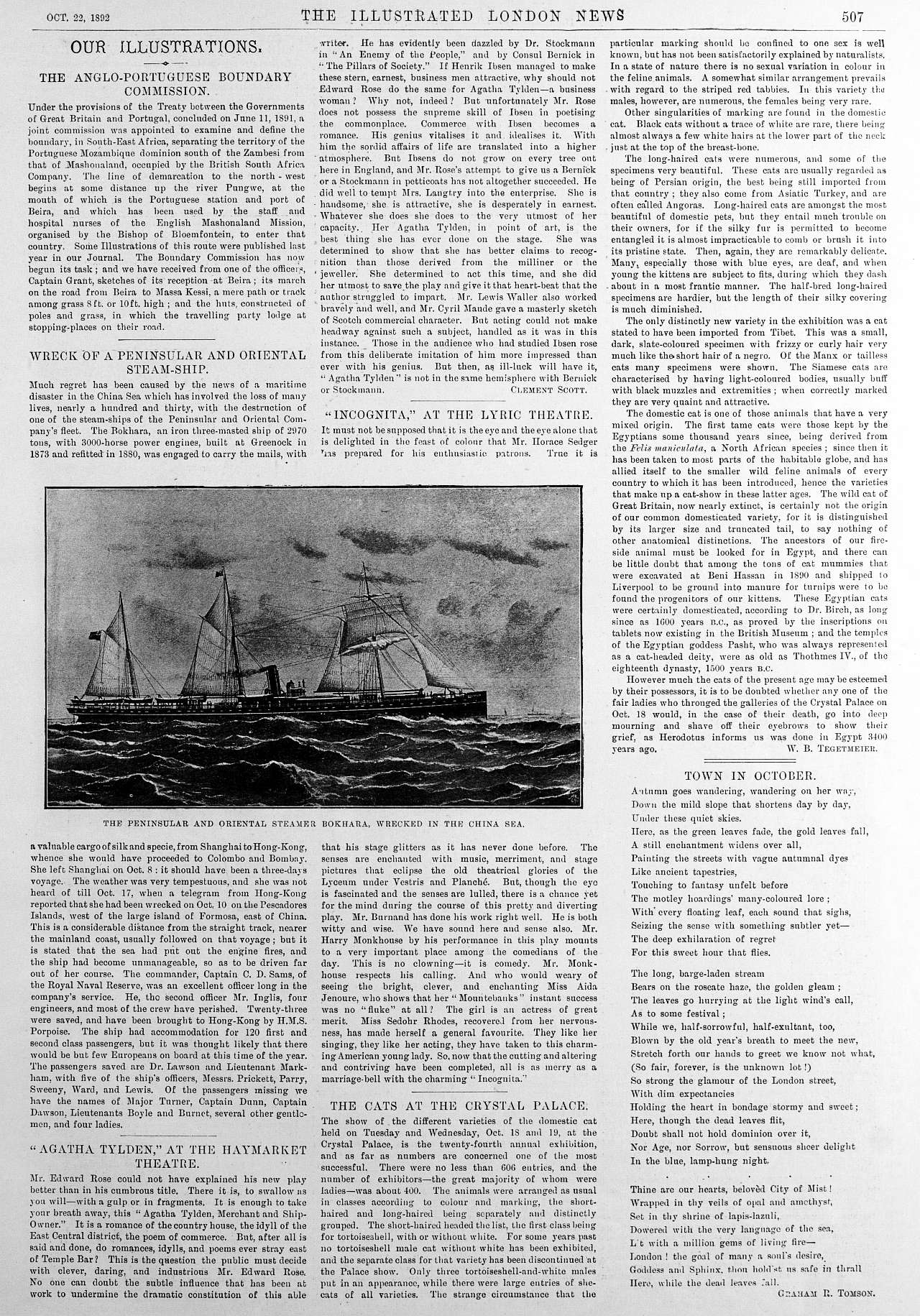
The original engraving is then sent to the stock-keeper to be entered and placed upon the rack as an important item in the proprietor's assets. In one particular firm the stock of original wood-blocks alone is estimated at no less a value than about three-quarters of a million sterling. Half-a-dozen "pulls" are now taken to the electro; of these one goes to the editor for literary purposes, another to the art editor's stock-book, a third is required for "pasting-up" or arranging the dummy of the forthcoming paper, while the three remaining impressions are sent to the "over-layers". These indispensable personages, like the touchers-out and the electrotypers, on the one hand, and the folders, stitchers, and others, are all under the sway of the master-printer. It is interesting to watch them as they take each of the three impressions in turn, and, with the skilful use of sharp knife, rapidly cut out from the first those portions of the paper which, in the engraving as printed, are to appear as highlights, from the second the highlights and all the lighter tints, and from the third everything but the darkest portions, so that when these three perforated pieces of paper are pasted together, superimposed, and fixed to that portion of the "tympan-sheet" ( a padlike device interposed between the platen of a printing press and the sheet to be printed, in order to soften and equalize the pressure) on the printing press, just on the spot coinciding with the block, on pressure being applied to the paper to be printed, the greatest amount of it is brought upon the blackest portions of the engraving, while the lights are almost wholly relieved of it. In this manner is artistic printing is produced, though it is to be feared that to the ordinary eye the excellence of the result, and the infinite trouble and skill given to obtain it, are but slightly appreciated.
And when the sheets from the different machines have been stacked, so that the ink may dry and the weight remove the indentations they may have received, they are then folded, either by hand or machinery stitched by both, and trimmed with a "guillotine"; and by the small hours of Thursday morning the first edition is ready for Smith's carts to collect them for despatch by the newspaper-train to the farthest points in the country- to Scotland and Ireland
In the Art Department: The Staff
Having cursorily followed the process through which the artist's work has passed, from it's delivery to the art editor to it's distribution to the public, the visitor is invited to witness how that work is produced. The paper maybe conducted on two principles: the work may either be executed by a fixed staff or it maybe invited from a variety of artists more or less allied to, yet not entirely identified with, the art fortunes of the paper. There is no doubt that the advantages of the former system include greater practice and punctuality and saving of trouble to the art editor and of delays to the printer; while those of the latter, which are not to be despised, secure a greater variety and freshness of treatment - a freedom from any special rut and greater catholicity of manner of representation. In both cases the art editor must be able to depend upon the services of specialists.
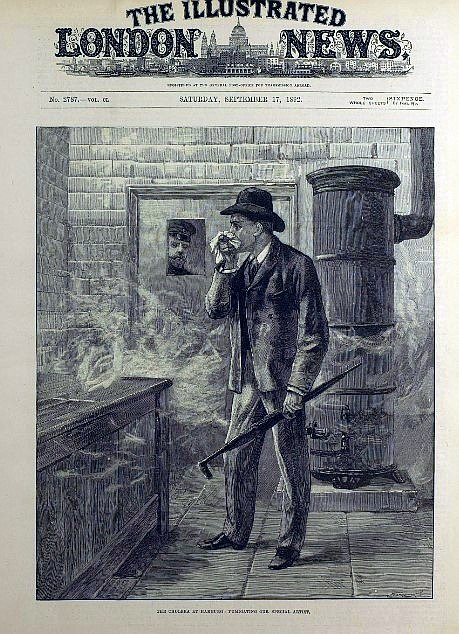
First comes the "special" with a retaining fee, whose duties are to be able to sketch anything, anywhere, at any time; for whom difficulties in obtaining information do not exist, and who knows how best to place that information in his editor's hands by the moment it is wanted, and whose general knowledge of men and things will enable him to present every detail unerringly to the artist whose duty it is to receive his sketches, however slight, and place the scene depicted accurately as well as artistically on paper or on the wood. he must be goodat all things drawable, and have withal an artistic sense of the fitness of time and things. In short, he must combine all the finest qualities of the journalist and the artist..
Then there are the marine artist, the portraitist , landscapist, the ceremonial man, the horse and animal draughtsman, the story illustratorafter his kind, the military specialist, the character artist, the ethnographical and geographical experrt, the architechtural draughtsman, the Parliamentary and rustic men, the sporting artist and he with a pretty humour for the enlivement of the pages - all these in turnbecome of the first importance to the paper, and must keep themselves at the absolute disposal of the editor at every hour of the day or night whether they work "in the house" or at home. Many of them, as is well known, are artists of worldwide reputation, who have attained their eminence in the increasingly popular art of black and white.
In addition to these are the draughtsmen who "work up" sketches and drawings which contributed by amateurs, are not sufficiently good to pass muster as they are, and who can so touch up a photograph, by the addition of figures and skies, and the suppression of those unnecessary matter of fact details which the camera relentlessly yields, that the result is practically a drawing in the artistic sense.
Supplementary to this home staff, there are the representative artists in the chief centres of the world, whose duty is to send home sketches of any event of importance that may occur in their district, should the incident not be of such a character and importance as to induce the editor to send his own "special" to the spot. One or more such specials are usually travelling about the world in the service of the journal, and in times of war or similar or similar events of universal interest as many as half a dozen may be in the field at once .
Besides these, in several ships of her Majesty's Navy, and in many regiments on the various stations, officers are acting, so far as regulations permit, in the artistic interests of the "Illustrateds"; and it is not too much to say that but for them many incidents which have thrilled the public and contibuted enormously to the popularity of the illustrated papers would have passed unrecorded, save, perhaps, in the bolder news columns of the daily press.
With the mention of the amateur sketcher on the look-out for news, and the painter willing that his work should be engraved, my list of contributors, appointed and promiscuous, is exhausted.
|