Click
here to go to The Year Grid
How the excavation of Tutankhamen was reported by
The Illustrated London News 1923 - Oct 13th
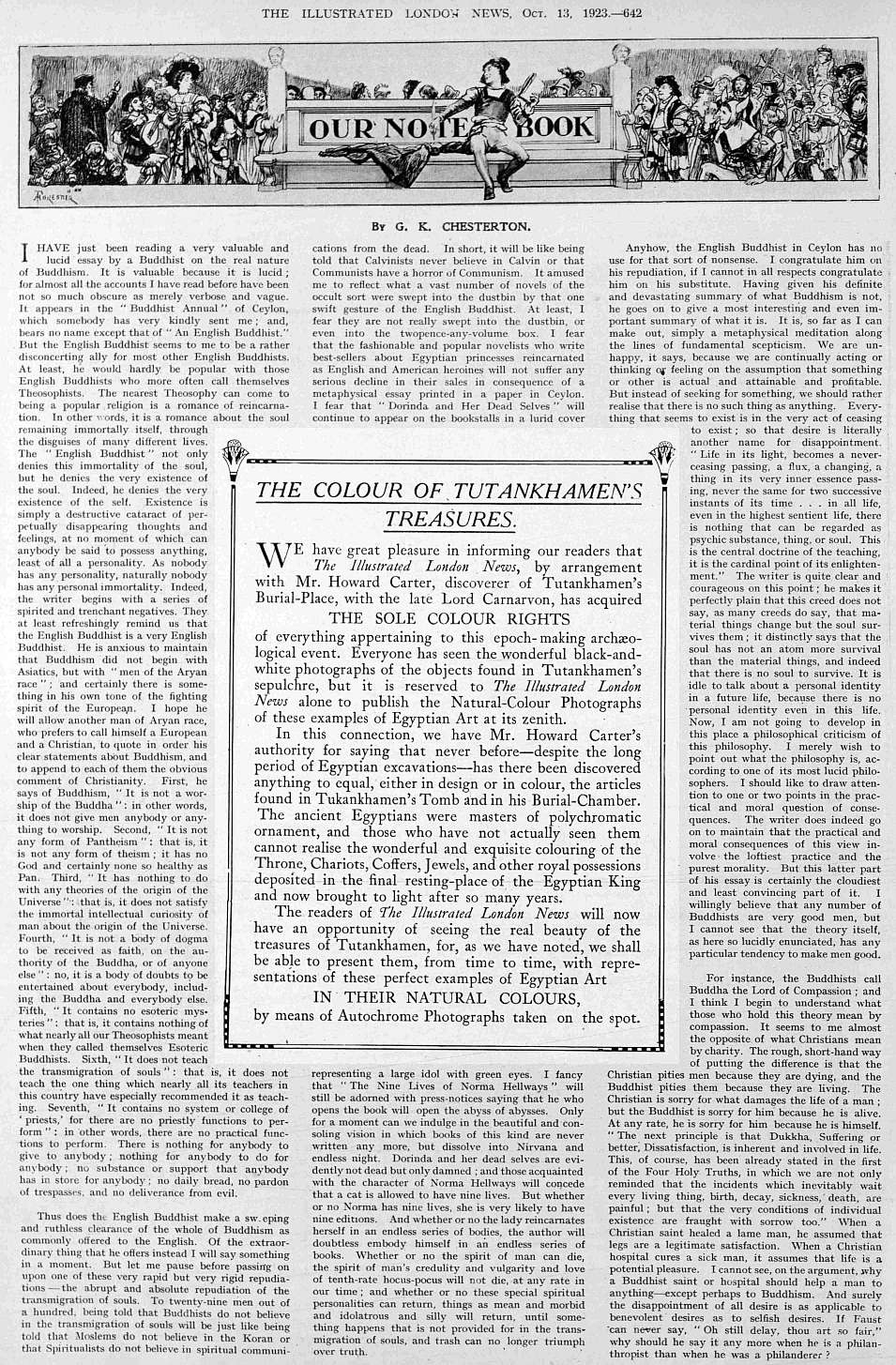
61. The colour of Tutankhamen's treasure
The sole rights to colour images granted to Illustrated London News
The original colour photographs of Tutankhamun's (Tutankhamen's) tomb and its treasures were taken by Harry Burton
during the 1922 archaeological expedition led by British archaeologist Howard Carter.
The process of capturing colour photographs during that time was quite complex and required specialized equipment and techniques.
1. Autochrome plates: The colour photographs of Tutankhamun's tomb were taken using the autochrome process.
Autochrome was one of the early methods of colour photography, invented by the Lumière brothers in 1903.
It involved using glass plates coated with microscopic grains of potato starch dyed in red, green, and blue colours.
These dyed grains acted as colour filters.
2. Long exposure times: The autochrome plates had a slow speed, meaning they required long exposure times.
This made photographing the dark interior of the tomb challenging, as the available light was limited.
Artificial light sources were used to illuminate the tomb's treasures, but it was still a time-consuming process.
3. Careful composition and lighting: Since colour photography was in its early stages,
photographers had to carefully compose their shots and consider the lighting conditions to achieve the best results.
They had to ensure that the colours of the artifacts appeared as accurate as possible.
4. Delicate handling and transportation: The fragile autochrome plates had to be handled carefully to avoid damage,
especially during transportation from the excavation site to the processing laboratory.
5. Developing and processing: After capturing the photographs, the autochrome plates were developed and processed in a laboratory.
This involved removing unexposed grains and dye fragments to reveal the final colour image.
6. Limited colour range: It's essential to note that the autochrome process had limitations regarding colour accuracy and range.
The colour palette was not as extensive as modern-day colour photography,
and the resulting images might not have been as vibrant and accurate as the actual artifacts.
Despite the challenges and limitations of the autochrome process, the photographs taken by Harry Burton
provided invaluable documentation of Tutankhamun's tomb and its treasures.
They offered a glimpse into the stunning riches of the ancient Egyptian pharaoh
and remain essential historical records for researchers and enthusiasts today.
Autochromes and the dawn of colour photography
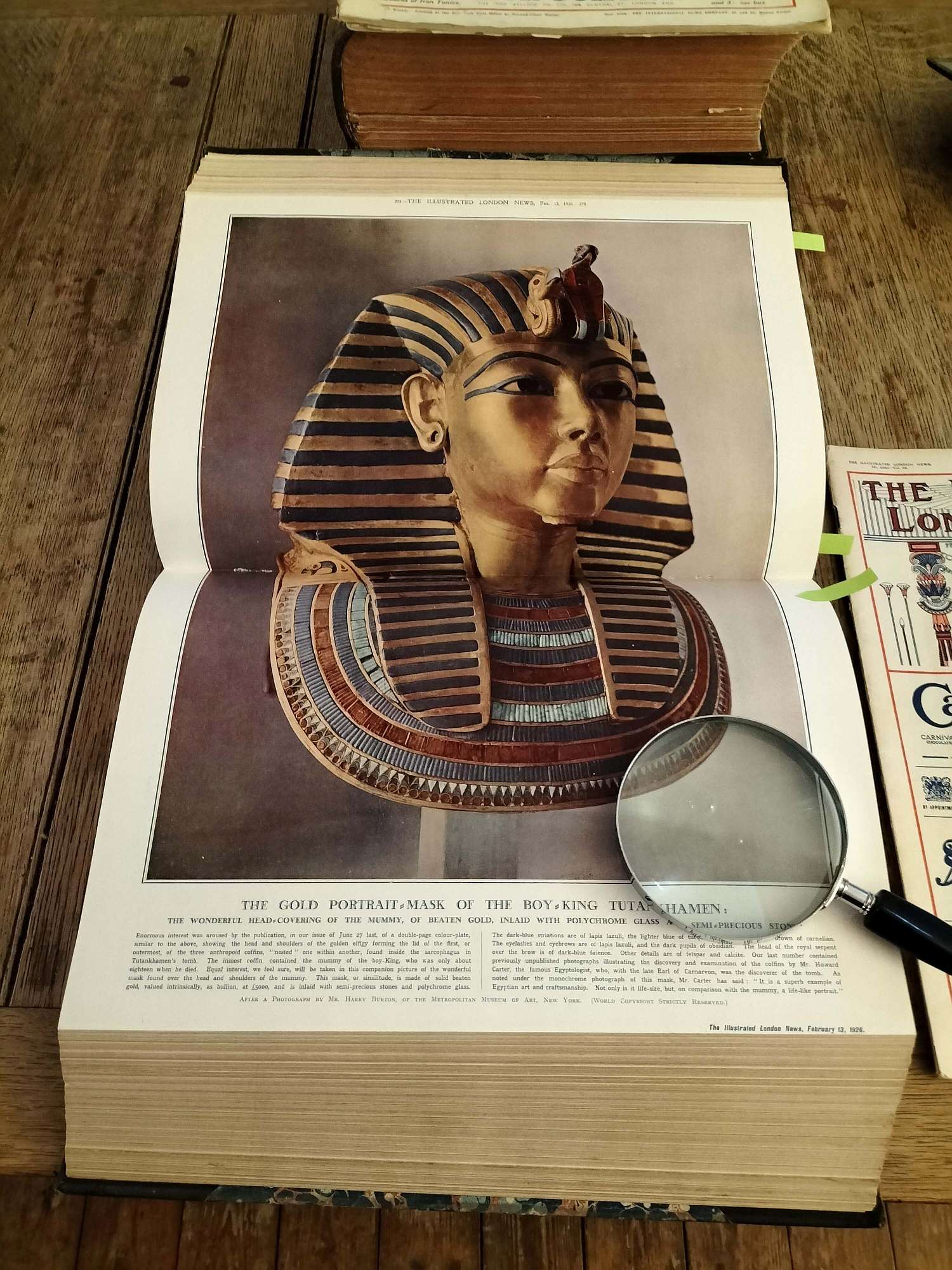
61a Gold Portrait Mask
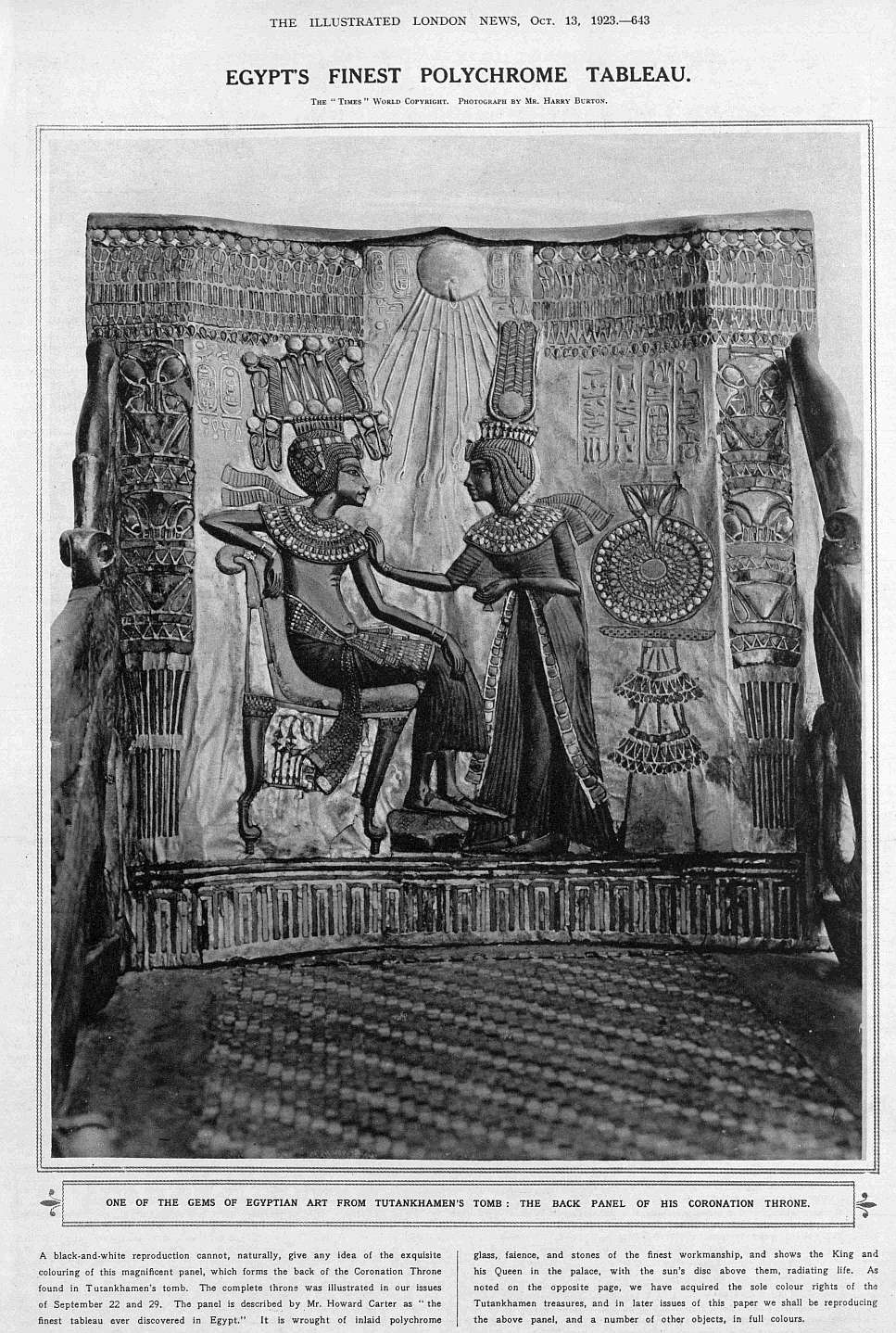
62. Egypt's finest polychrome tableau
One of the gems of Egyptian art from Tutankhamen's tomb:
The back panel of his coronation throne.