The Illustrated London News
This is a research and development page and not ready for the public
however if you are here - just enjoy

Tutankhamen 1923
The discovery and exploration of Tutankhamun's tomb in 1922 by Howard Carter captivated the world.
The Illustrated London News played a pivotal role in reporting the findings over the next decade.
Uncovering treasures unseen for thousands of years, the tomb provided unprecedented insights into ancient Egyptian royalty.
The newspaper's extensive coverage included detailed articles, interviews, and illustrations, bringing the excavation to life for readers.
The ongoing reporting by the Illustrated London News fueled public fascination, sparking a renewed interest in ancient Egypt and leaving a lasting impact on archaeology.
Below is The Year of 1922-1923- the links are to the images and articles starting at December 9th 1922
about the Tutankhamen discoveries (some of the pages are not finished yet)
1922 |
||||
1923 |
||||
1924 |
||||
1925 |
||||
1926 |
||||
1927 |
||||
1928 |
||||
1929 |
||||
1930 |
||||
1931 |
||||
1932 |
||||
1933 |
||||
* Death of Lord Carnavon
If you would like to donate
something to
NSPCC
National Society for the Prevention of Cruelty to Children
The Illustrated London News holds the distinction of being the world's first illustrated newspaper. Its publication spanned an impressive 161 years, from 1842 to 2003. Considered a remarkable visual representation and historical record of British and global events, it offers insights into the early 21st century. While my collection doesn't encompass every ILN edition, I possess over 7000 of them. On my website, you'll find over 1,000 "long pages" featuring articles and images. However, it's important to note that these pages represent only a small fraction of the vast content contained within the quarter of a million pages across more than 7,000 issues, amounting to an astounding collection of over 1,500,000 images.
A glimpse into the content of
The Illustrated london News
by year in the Victorian era.
(Victoria came to the throne in 1837 - ILN 1st published 1842)

A glimpse into the content of
The Illustrated london News
by year in the 20th Century.
Contextual essays about The Illustrated London News
from Gale primary resources
Explore Victorian Trivia.

Another singing mouse!!! at the Exchange Public House, Charlton..
A full page of Victorian
Classified Adverts 1847
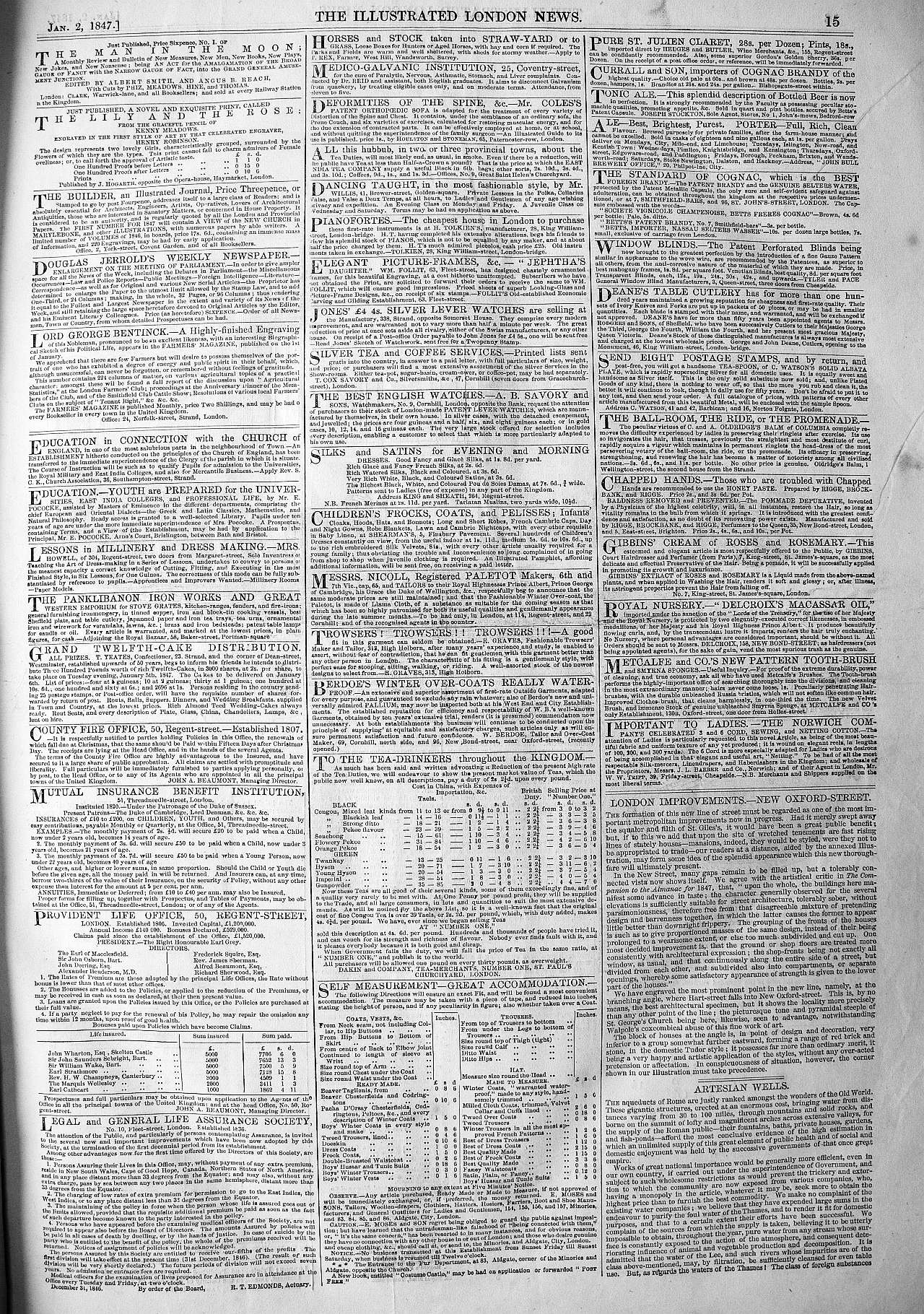
A full page of Victorian
Classified Adverts 1845

The American civil war as covered by the Illustrated London News

Fort Sumter being shelled at the beginning of the civil war
(below is a rough idea of the depth of coverage by the ILN on the war)
January to June 1861 -(165 Articles, 50 Illustrations)
July to December 1861 -(210 Articles, 56 Illustrations)
January to June 1862 -(203 Articles, 48 Illustrations)
July to December 1862 -(156 Articles, 18 Illustrations)
January to June 1863 -(175 Articles, 28 Illustrations)
July to December 1863 -(127 Articles, 25 Illustrations)
January to June 1864 -(140 Articles, 19 Illustrations)
July to December 1864 -(179 Articles, 26 Illustrations)
January to June 1865 -(206 Articles, 31 Illustrations)
July to December 1865 -(161 Articles, 8 Illustrations)
The New Hartley Mining disaster 1862

The New Hartley pit calamity :
The funeral procession leaving colliery now for Earsdon church yard
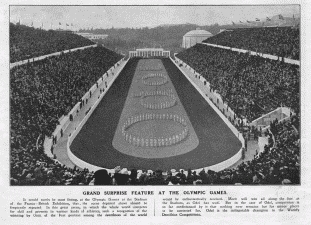
The 1908 Olympic Games
1842 Chartists at Preston, Lancashire

The Illustrated london News
A list of some Special numbers
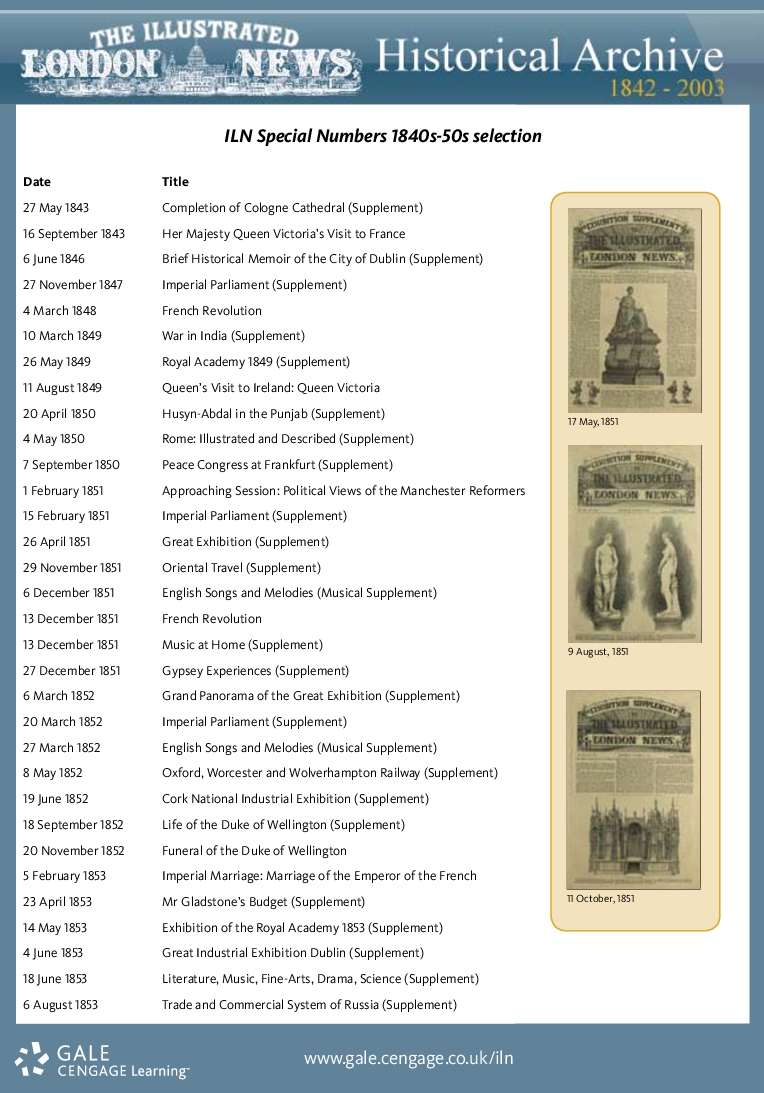
Appendix List of Special Editions
of ILN from 1873

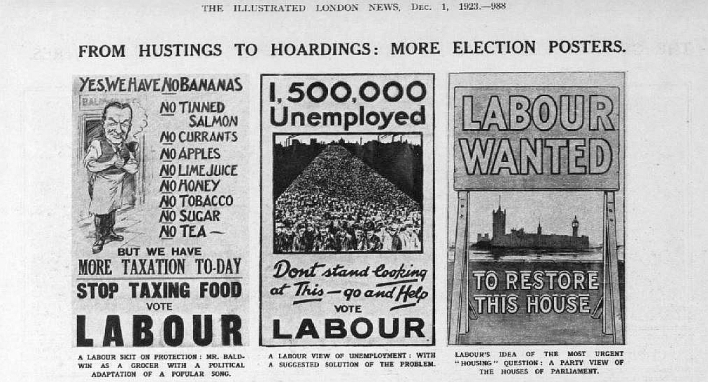
General Election Posters from 1923, 1924, 1931 and 1935
If you would like to donate
something to
NSPCC
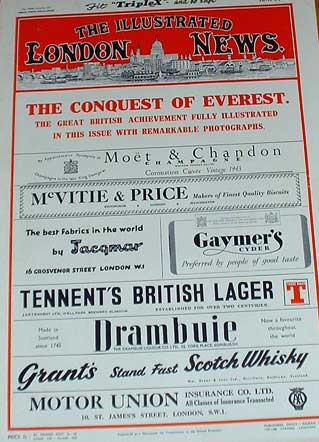
The Conquest of Mount Everest 1953
Illustrated London News 1873 - 1981
Appendix 2 (43 to 80) |
|
|
Illustrated London News 1873 - 1981
Appendix 3 (81 to 137)
|
|
|
Illustrated London News. 1873 - 1981
Appendix 4 (138 to 181) |
|
|
|
|


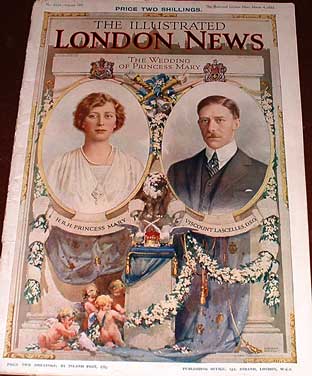
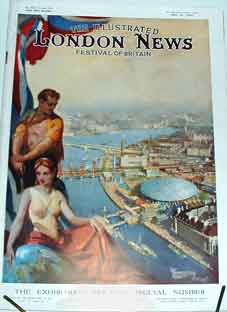

This is a research and development page and not for the public
however if you are here - just enjoy

Lancaster Castle Station 1846
Opening of the The Lancaster - Carlisle Railway 1846 as reported in The illustrated London News
Sir William Tite was the architect of Lancaster station
Joseph Locke was the engineer who designed the route of the Lancaster to Carlisle Railway
Visit the NEW "Tite & Locke" Pub on Lancaster Railway Station
The Lancaster & Carlisle Railway opened in several stages: the lines from Lancaster to Kendal Junction (later Oxenholme) and the two-mile section of the Kendal & Windermere Railway as far as Kendal were opened on 21 September 1846; the ceremonial opening of the whole line was held on 15 December 1846 and a special train ran from Lancaster to Carlisle. A special was operated on the 16th, carrying guests returning south, and public services commenced on the 17th. The weather, which the ILN describes as severe, encouraged speculation about the climb up Shap Fells; light snow covered the higher ground and sheets of ice were hanging down the sides of Shap cutting. The locomotive was a Trevithick-Allan 2-2-2 Dalemain, named after the residence of the L&Cs chairman, and was preceded as far as Shap by a sister engine Greystoke in case assistance was needed on the climb. It was not, and Dalemain breasted the summit at 22mph. During the speech briefly referred to in the passage on 'The Contractors' Dinner'.
John Stephenson predicted that 'some improvement may be made in the construction of the engines which will make it practicable to go up 1 in 75 at 30mph, or even twice that speed'. In fact a train went up at 35mph in the first week; 60mph was not achieved until 16 November 1936 when Princess Elizabeth went up at an average of 64.5mph between Tebay and Shap Summit box. The bridge over the River Lune at Lancaster, depicted in one of the illustrations, was replaced in 1866 when the original three laminated-timber arches were rebuilt in wrought iron. A footpath has always been provided across the bridge since this was a condition of Lancaster council's approval.
OPENING OF THE LANCASTER AND CARLISLE RAILWAY, ON TUESDAY LAST
Tuesday last was the day appointed for the opening of this new line of Railway. Accordingly, the Castle Station, at Lancaster, by eleven o'clock, was a scene of unusual bustle and excitement; and numbers of individuals, in spite of the severity of the weather, were grouped in the old churchyard, and on the terrace of the Castle, to view the public ceremony, by the Directors of the Lancaster and Carlisle Railway, throwing open to the distant chies of the north those advantages which their more southern neighbours have long enjoyed. The necessary arrangements being completed, the Directors' train, consisting of six first-class carriages, and three second-class carriages, moved slowly from the Castle Station, across two high embankments, to the Lune Viaduct, a work of extreme difficulty, consisting of eight stone and brick arches, of fifty-three feet span. As a speci-men of strength and lightness, this struc-ture is not surpassed on the Line; and its three laminated timber arches give it a highly ornamental appearance frorn the town: the whole was completed in about twelve months.
Hest Bank comes next, a small bathing village on the borders of Morecambe Bay, which lies on a wide expanse of sandy desert for many a mile, bounded by the hills of Westmorland. The train then pro-ceeded at a more rapid rate through some deep cuttings, past Carnforth and Holme Stations, to Milnthorp Station, along an embankment of great length. This station is very substantial, and will be the best, in point of accommodation, on the Line. Beyond Sedgwick, after passing an em-bankment, and through some heavy rock cutting, the train stopped at Oxenholme Station, within two miles of Kendal, at the junction of the Kendal and Winder-mere Railways. A fine view of the town of Kendal was enjoyed frorn this station: the winter sun lit up the church spires, and blue roofs of the white houses which lay in the vale beneath; whilst, far beyond, rose the white-capped mountains of the West - the giants of the Lake. After a few minutes' delay, the whistle of the engine gave notice of starting; and the precaution was here taken of sending a pilot engine a few hundred yards a head.
For the next mile or two, occasional glimpses were obtained of the town of Kendal, and its old Castle; the train then passed round Hay Fell, and away over Docker Garths Viaduct, commonly called Fiddler's Gill, a work of beauty and great-ness (the middle arch being about 80 feet high); and then, past Lowgill Station, over an embankment 90 feet high, to the proposed junction of the North Western Railway; and onward, round the base of Dillicar Fell, at an elevation of 200 feet from the river, which lies at the foot of the embankment; a large amphitheatre of hills rises on every side, and the path seems at an end; but the skill of the Engineers (Messrs. Locke and Errington) carried this line over many a place deemed impracticable - round the foot of hills, across rivers, over vallies, &c.
Crossing Brown Beck by a Viaduct of red freestone, and the river Berbeck by another large viaduct, the rise to the summit at Shap commences. The cutting here is the deepest, hardest, and most expensive on the line, and varies from 50 to 61 feet in depth. The works were first commenced here in june, 1844. The summit at Shap is 900 feet above the level of the sea. Around, is a region of bare hills and cheerless scenes, making quick travelling a comfort. But Clifton Moor Station is passed, and the train passes over the river Lowther, by the Lowther Viaduct, a noble work, and next in importance to, the bridge across the Lune. It is unrivalled for boldness and beauty of proportion; and consists of 7 semi-circular arches of 60 feet span, supported on piers, 8 feet in thickness at the top, and increasing to 18 feet 6 inches at the base. Its total length is about 500 feet. The scenery here is a perfect contrast to the region passed. Lowther Park, with its thick and massive Woods - the clear winding river, 100 feet below - the stern grandeur of the distant mountains, just tinted with the last farewell rays of the setting sun - formed a beautiful picture.
A short mile from here is Eamont Viaduct, crossing the dark and wooded banks of the Eamont, with five arches of 50 feet span each, and 70 feet high. An embankment beyond commands a fine view of Brougham Hall, the residence of Lord Brougham; its stately park and large pleasure-grounds looked gloomily with their winter's clothing. At Penrith, the train was met by another from Carlisle; and, after gazing for a short time at the ruins of its old Castle, they each pro-ceeded onward to Carlisle. The county, for some miles, is flat and uninteresting, with the exception of Borrock Lodge, which stands on the borders of a vale of remarkable loveliness. A high embankment passes Wreay Hall and village, noted for the beauty of its Chapel. Further on is Newbiggin Bridge - a neat wooden erection, built for the convenience of the proprietor of Newbiggin Hall, H. A. Aglionby, Esq.
The train reached Carlisle between four and five o'clock. A splendid dinner was served in the Athenaeum, to the Directors and their friends; the confectionery and most of the table ornaments having been forwarded from Liverpool.
A trial trip, from Carlisle to Lancaster, was made yesterday week. The Directors in the train, we learn from the Carlisle journal, were Mr. John Dixon and Mr. G. H. Head, who were joined at Penrith by Mr. E. W. Hasel (Chairman of the Directors), Mr. H. Howard, of Greystoke Castle, and Lieutenant-Colonel Maclean. They were accompanied by Mr. T. C. Heysham, Mr. P. Dixon, Mr. Steel, of the Carlisle journal, Mr. Larmer, Resi-dent Engineer, Mr. Collister, Resident Engineer of the Caledonian Railway, Mr. Mould, Mr. Hemberow, Mr. Green and two or three other gentlemen connected with the works. The train consisted of the engine, tender, and three carriages. It proceeded at the rate of upwards of 30 miles an hour, and would have reached Penrith (18 miles) in about 35 minutes, but for a slight accident when about two miles from that place. It caused a delay, however, of upwards of an hour, when the train again proceeded on its way -reaching Lancaster (70 miles) in about three hours of actual travelling - the Directors having stopped at several places to inspect the works.
In the evening, the Directors, engineers, and friends, dined together at the King's Arms Inn, and next morning, were joined at breakfast by Captain Coddington, the Government Inspector, who had just arrived from London. A little after eight o'clock, they started with a train of four carriages on the return to Carlisle. The day was excessively cold, with rain, sleet, snow, and frost, by turns. At times, the rails presented the appear-ance of long lines of ice, and were extremely slippery. The difficulty on such a day was the ascent of the great incline on Shap Fells, one of the severest gradients on any railway in England: the whole party watched this with no little interest; and it must have been highly satisfactory to both Engineers and Directors, when Captain Coddington, who stood upon the engine and timed its pro-gress, announced that the ascent had been made, notwithstanding the unfavourable state of the rails, at the rate of 20 miles an hour - although the engine was an old one, and not of the most powerful class. All the heavy works - the bridges, viaducts, cuttings, and embankments - were minutely inspected by Captain Coddington, who expressed himself, at the end of the journey, as highly pleased with the whole of the works, declaring that the public might travel upon the Line with the most perfect safety; and, immediately afterwards, gave the Directors a certificate to that effect. We may mention here, that the Line is double throughout, with the exception of about two miles, near Lowther. This portion will be made double in a month, or less. The Line îs remarkably easy nearly throughout - the exception being a short distance where it has been recently ballasted; and it passes through a country which can scarcely be surpassed for picturesque beauty and wildness of scenery.
ILN DEC. 19 1846
LANCASTER AND CARLISLE RAILWAY
The article continued the jollowing week:
Leaving the summit, we enter a cutting through limestone rock, and before it approaches Shap Village, the Line runs through a circle of large boulder stones, said to be the inner circle of an ancient Druidical Temple.
The Line now proceeds on the east side of the town of Shap, along a heavy cutting through limestone rock, and passing under an elegant skew-bridge, erected at an angle of 45 degrees. The Line next descends along the flat portion of the Line called Shap Mines; and following the valley of the stream, the Line again runs under the turnpike-road; and thence passing Thrimby, through a thick plantation. Here the character of the scenery is considerably altered - the bare, rugged, and sterile mountains being succeeded by fertile pastures and picturesque prospects.
The Kendal turnpike-road is crossed for the last time, by a skewbridge at Clifton, near the entrance to Lowther Park, in which, hidden by a forest of huge oaks, stands Lowther Castle, the seat of the Earl of Lonsdale.
The scenery between Shap and Clifton is very attractive - Cross Fell, Saddle-back, Skiddaw, and the other hills in the Lake District, appearing to great advant-age.
We are now carried along the Lowther Embankment, and about 50 miles from Lancaster and 20 miles from Carlisle we cross the river Lowther on a magnificent viaduct, 100 feet above the stream. Its arches, six in number, are of 60 feet span each; its total length, 500 feet. It is the largest and one of the most beautiful objects of art on the Line. A mile and a half from the Lowther Viaduct, the Line crosses the Eamont on a viaduct of great beauty, consisting of Five semi-circular arches of 50 feet span each. Its height is 70 feet, and its extreme length upwards of 300 feet. Westmoreland is now left in the rear, and we enter "Canny Cumberland," - the two counties being divided by the stream which we have just crossed. We immediately enter a large cutting, containing 180,000 cubic yards, and the Line then runs nearly level to the town of Penrith: the Station closely adjoining ruins of the ancient Castle.
From Penrith, the Line enters the valley of the Petteril, through which it pursues almost a direct course to Carlisle, joining the Newcastle and Carlisle Railway at the London Road Station, where the line is 36 feet above the level at Morecambe Bay, and 852 feet below the Shap summit. Besides the principal viaducts enumerated, the works on the Line comprise 15 turnpike-road bridges, 64 occupation-road bridges, 86 occupation bridges, 47 cattle creeps, and 60 level crossings.
- Total quantity of gunpowder used upon the works - 4133 barrels, of 100 Ibs each, or 184 tons. Coils of fuse, 61,044; length of fuse used, about 416 miles.
- On the Kendal district alone (five miles) the holes drilled for blasting amount to 41 miles.
- Number of nights worked, 152,147.
- Horses night work, 10,500.
- Rock, 844,000 cubic yards. Independent of this rock, there bas been at least 400,000 cubic yards of sand requiring blasting, making the rock work nearly one-seventh of the whole excavations.
- Greatest number of men employed upon the works, 9,615.
- Greatest number of horses employed upon the works, 790.
- The number of days' work executed on the Line is equivalent to the work of three millions of men for one day.
- The excavations average nearly 100,000 yards per mile.
- Making deductions for the time lost by the men, and the unusually wet country through which the Line passes, the working time in which the Line has been completed is fifteen months.
We have engraved one of the festal commemorations of the Opening of the Railway - viz., the sumptuous Dinner given by the Contractors, Messrs. Stephenson, Mackenzie, and Co. The entertainment took place in the Assembly Room of the Crown and Mitre Inn and Coffée House. This beautiful apartment was elaborately embellished for the occasion. At the upper end of the room, behind the President's chair, was displayed a mantle of white silk, emblazoned with the Royal arms, and arched with laurel and flowers. On each side appeared an illumination, the initials "V.A.," and surmounted by the order of the Star and Garter, within wreaths of evergreen. Against the wall, at the lower end of the room, was displayed an elegant flag, emblazoned with the incorporated arms of the towns of Lancaster and Carlisle, typical of the union of these two important towns by railway. Against the walls, on each side, were ranged silk flags bearing the titles of all the Railways for which Messrs. Stephenson, Mackenzie, and Brassey are Contractors, about a dozen in number,and constituting in the aggregate upwards of 800 miles of railway communication. In addition to these decorations, appeared a number of other devices, illuminated by Royal crowns, stars, &c.; wreaths of evergreens gemmed with roses, and inclosing loyal and other mottoes. With the lustre of the illuminations, aided by the light of three chandeliers depending from the ceiling, the room presented a most brilliant appearance. The dinner, supplied by Mr. jarman and Mrs. Wells, host and hostess of the hotel, was of the most costly description.
The dessert, wines, &c., were excellent. Mr. Scarisbrick, the celebrated organist of Kendal, presided at the pianoforte. The chair was occupied by John Stephenson, Esq.; G. Mould, Esq., officiating as Vice. The number of guests exceeded 200, comprising not only the heads of the various departinents engaged in the construction of the Railway, from the resi-dent engineers and contractors down-wards, but a considerable number of influential strangers interested in other lines, and many representatives of the trade of Carlisle, Kendal, Lancaster, Preston, &c.
At the lower end of the room was an orchestra, occupied by an instrumental band from Cobden's establishment, Cross Hall, near Chorley, and also by a party of glee singers, chiefly from Preston, con-ducted by Mr. Edward Scarisbrick, of Carlisle.
We regret that we have not space to report the very interesting after-dinner proceedings. After the customary loyal toasts had been duly honoured, the healths of the Chairman and Directors, the Engineers-in-Chief, the Secretary, and the Resident Engineers, of the Railway Company were drunk with great applause; and the toast of "Messrs. John Stephenson and Co." was received with immense cheering.
Mr. Stephenson's reply modestly glanced at the difficulties which he had overcome in the construction of the Rail-way. He concluded by observing it was consoling and satisfactory to mark the progress of science, and he trusted that the time would come, and that ere long, when passengers could travel right through to Forfar. (Cheers.) The com-munication by iron rails between England and Scotland would be a great benefit to both countries; and, as an humble individual, he felt proud to, have been the means of amalgamating both sides of the Sark by the Trunk Line, part of which had yesterday been opened. (Cheers.) He could only say he felt obliged for the kindness of the Company, in speaking of him and his partners as they had done. He only regretted he could not reply adequately to their com-pliments, for he would repeat that he would rather make a railway than a speech any day. (Loud cheers.)
Mr. Mould, Mr. Horn, and other speakers, in their addresses, entered into the details of the great work; so that the day's proceedings were stored with a vast amount of practical information, instead of the complimentary common-place which usually characterises post-prandial eloquence.
ILN DEC. 26 1846
If you like my site and can afford it would you like to donate
something to
National Society for the Prevention of Cruelty to Children
click below
NSPCC
A Historical introduction to Lancaster

"Lancaster from the Moor"- 1868
from John Weedy's collection of
Illustrated London News

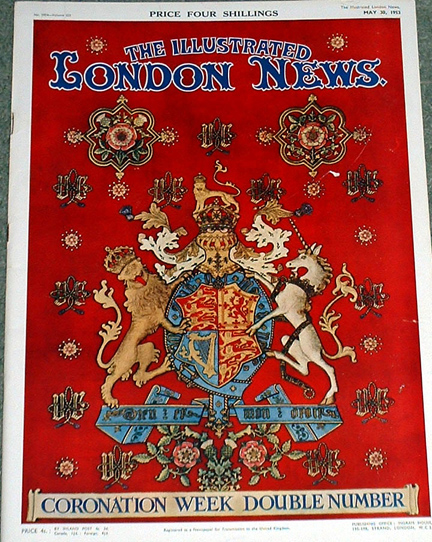
* 1953 - May 30th Double number -
The
Coronation of Queen Elizabeth II
History of The Illustrated London News :
A short History of the Illustrated London News
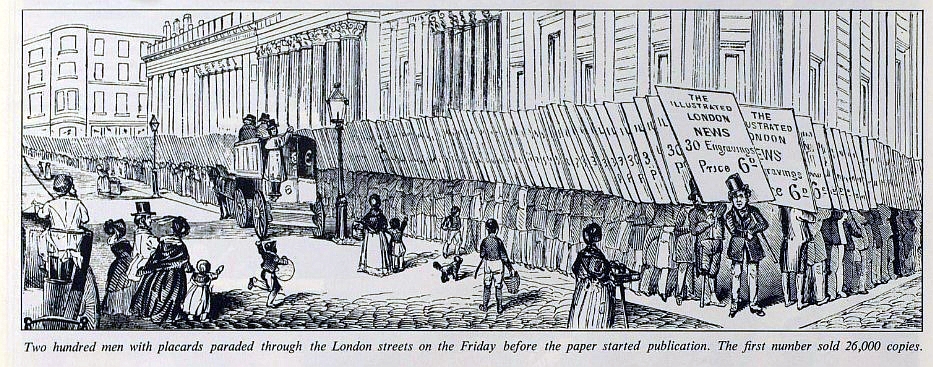
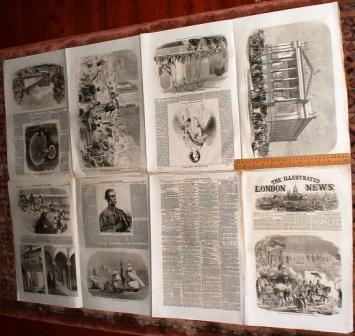
The way Illustrated London News was
printed
in 1858 (see May 15th)
.
This image is one of four from the first
colour supplement in the ILN of 1855
click the image
This is a research and development page and not ready for the public
however if you are here - just enjoy
1951 The Festival of Britain
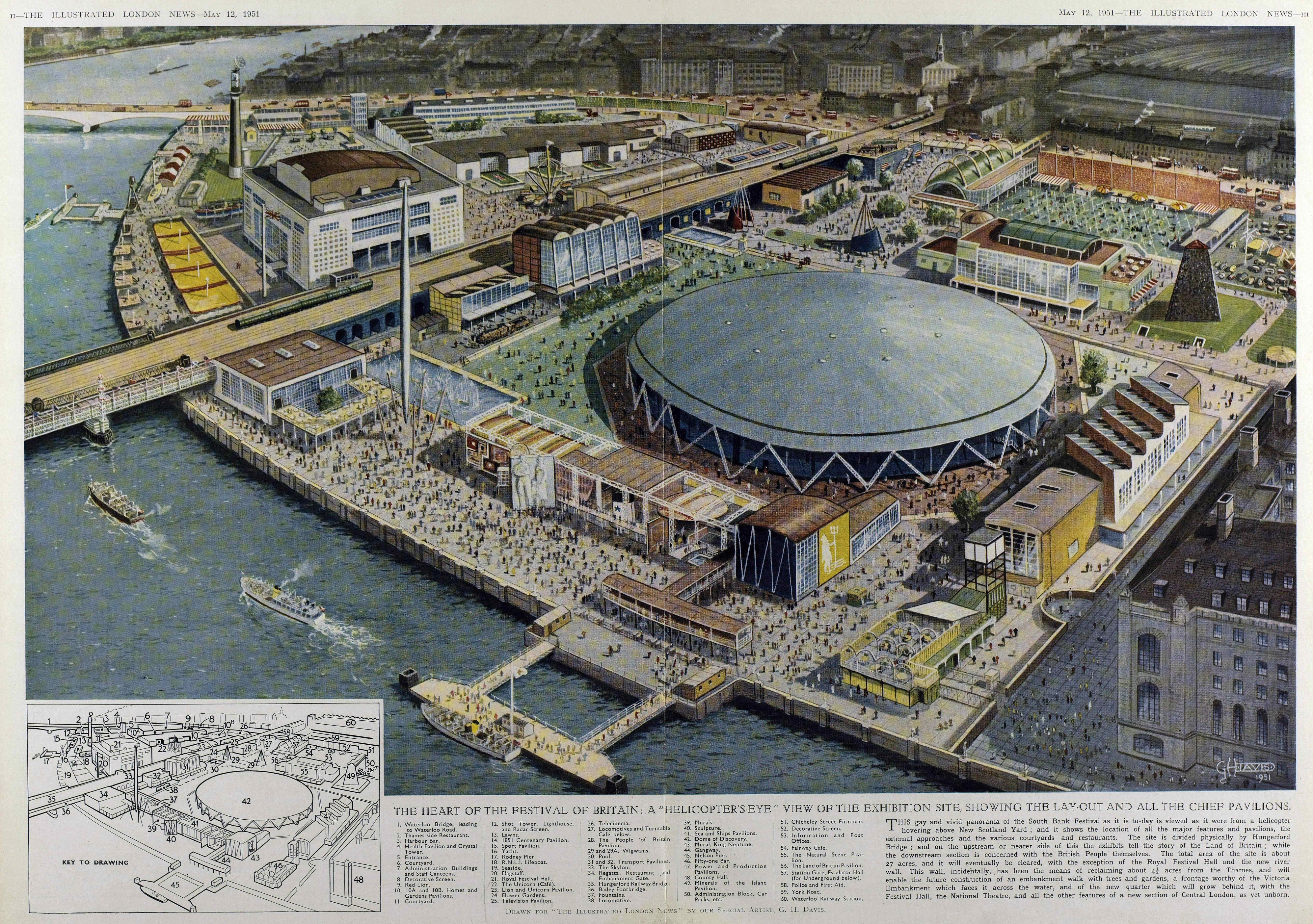
The site of the 1951 exhibition on the Thames, London
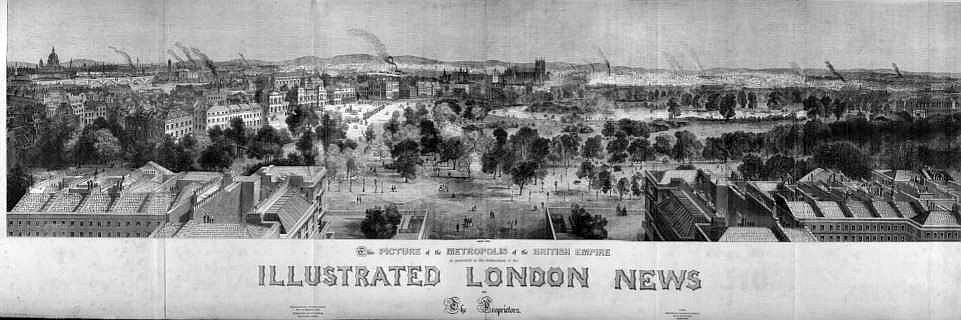
Large City Views
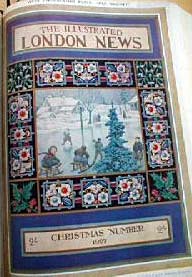
Decorated covers of some Christmas Editions
The Illustrated London News Christmas editions were highly anticipated and cherished annual publications that celebrated the holiday season. These special editions of the newspaper were released close to Christmas and featured extensive coverage of festive themes, traditions, and events.
The Christmas editions of the Illustrated London News were known for their elaborate illustrations, captivating stories, and rich content. They often showcased scenes of winter landscapes, holiday decorations, Christmas markets, festive gatherings, and iconic seasonal imagery. These illustrations were meticulously crafted and provided readers with a visual feast, capturing the spirit and charm of Christmas.
In addition to the stunning visuals, the Christmas editions contained articles, stories, and poems related to Christmas celebrations, customs, and folklore. They covered a wide range of topics, including Christmas traditions, historical accounts, charitable activities, holiday recipes, gift ideas, and more. These editions aimed to create a sense of warmth, joy, and nostalgia for readers during the holiday season.
The Illustrated London News Christmas editions became popular collectors' items over time, cherished for their unique content and artistic representations of Christmas. They played a significant role in shaping the cultural perception and celebration of Christmas in Britain and beyond.

Starting from 1936, the Christmas editions of the Illustrated London News adopted a distinctive house style that included a red border. This red-bordered format became a hallmark of the Christmas editions and was consistently used in subsequent years.
The red border added a festive touch to the publication, creating a visual distinction and signaling the special nature of the Christmas edition. It enhanced the overall presentation of the newspaper and further emphasized the holiday spirit. The red border design became instantly recognizable and anticipated by readers, as it became a cherished symbol of the Illustrated London News Christmas editions.
It's worth noting that while the red border was a consistent feature from 1936 onwards until 1971 when it became a more intermittent feature, there may have been variations in the specific design elements within the border, such as illustrations, typography, or additional decorative elements, depending on the year and edition.
There were no more Christmas editions after 2002 and the paper after 161 years, stopped being published after the summer edition of 2003.
1949
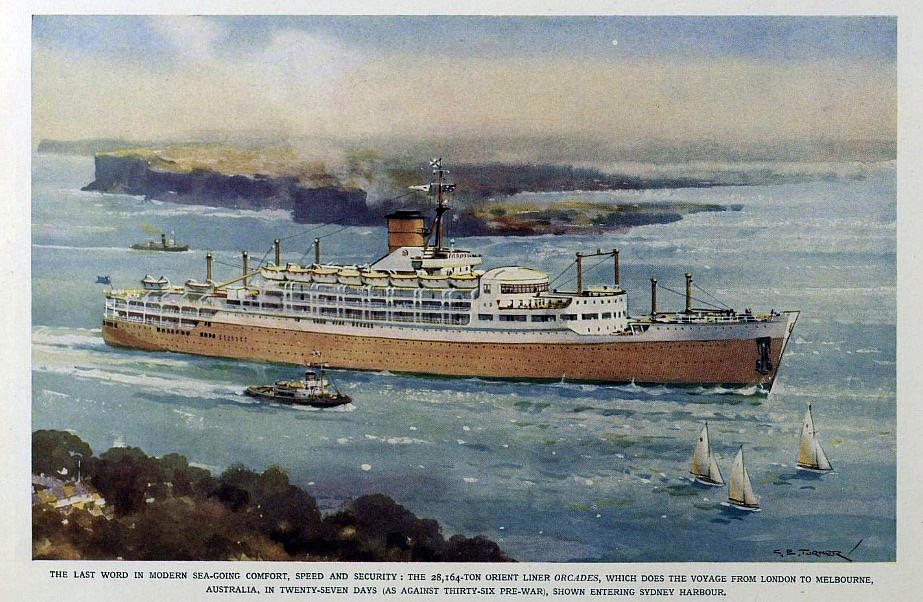
100 years ago some events of 1923 reported in
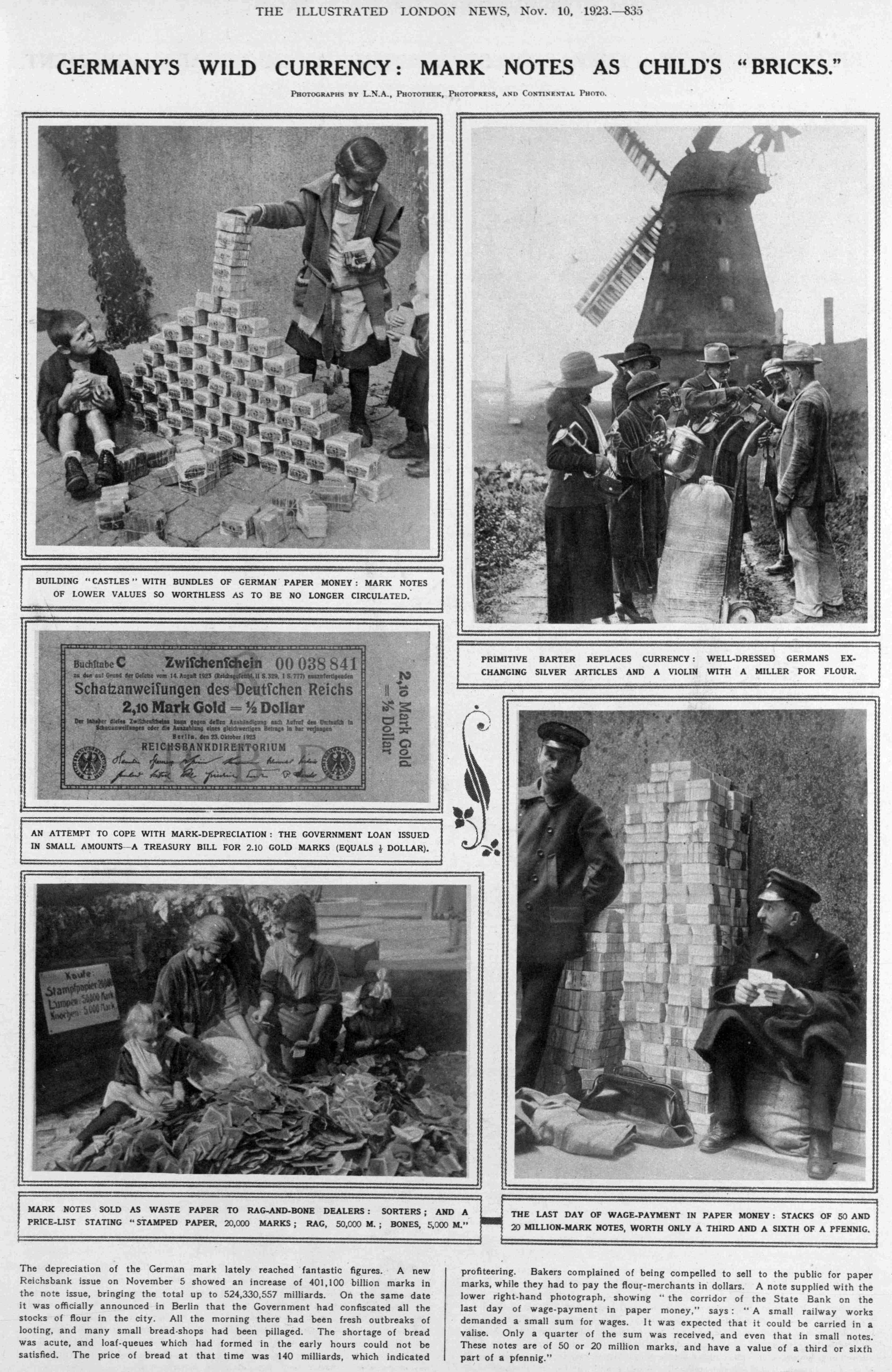
The Illustrated London New 1921
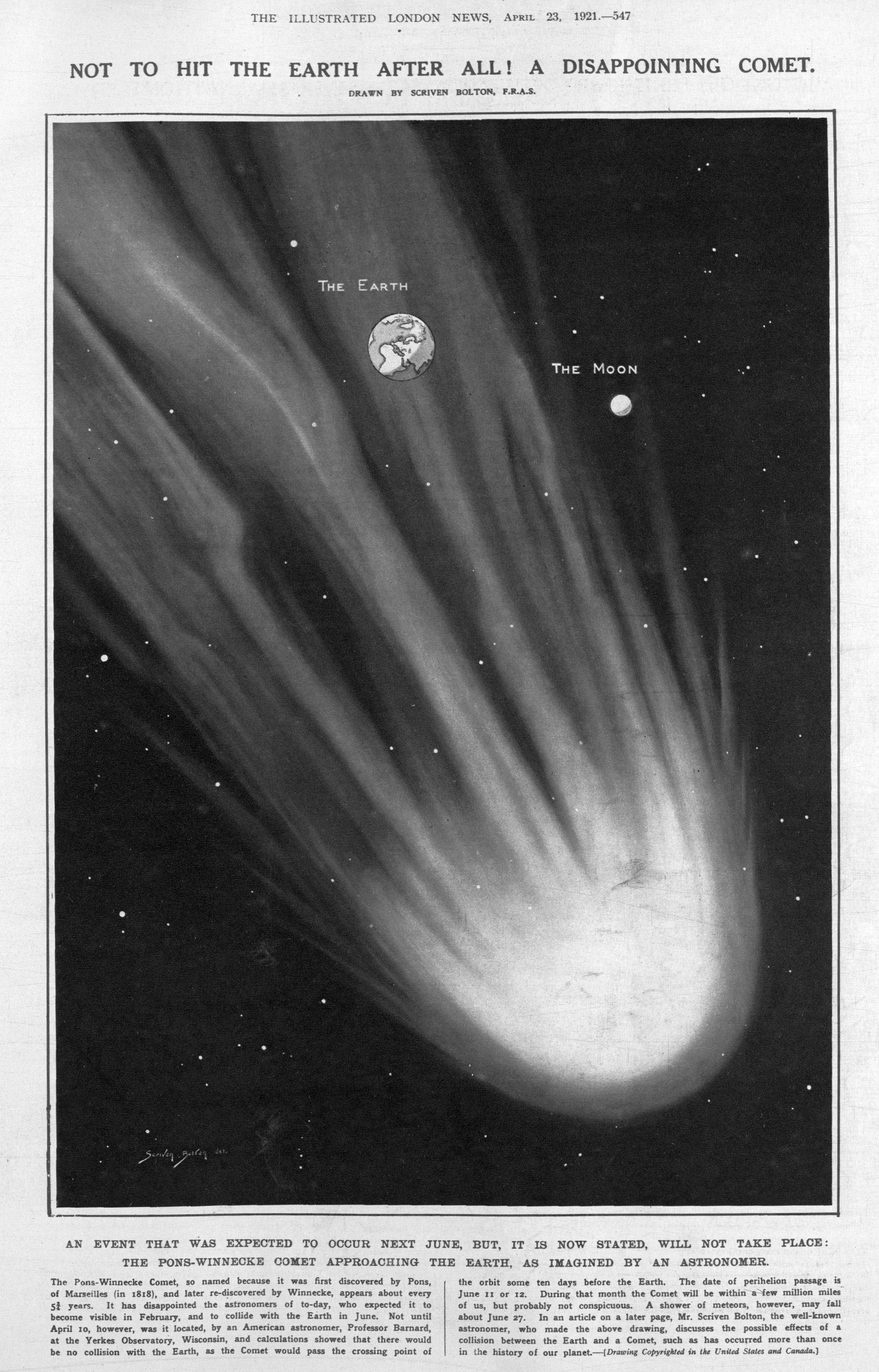
The Victorian Magazine -
read the
March 15th 1856 edition- complete
Illustrated London News
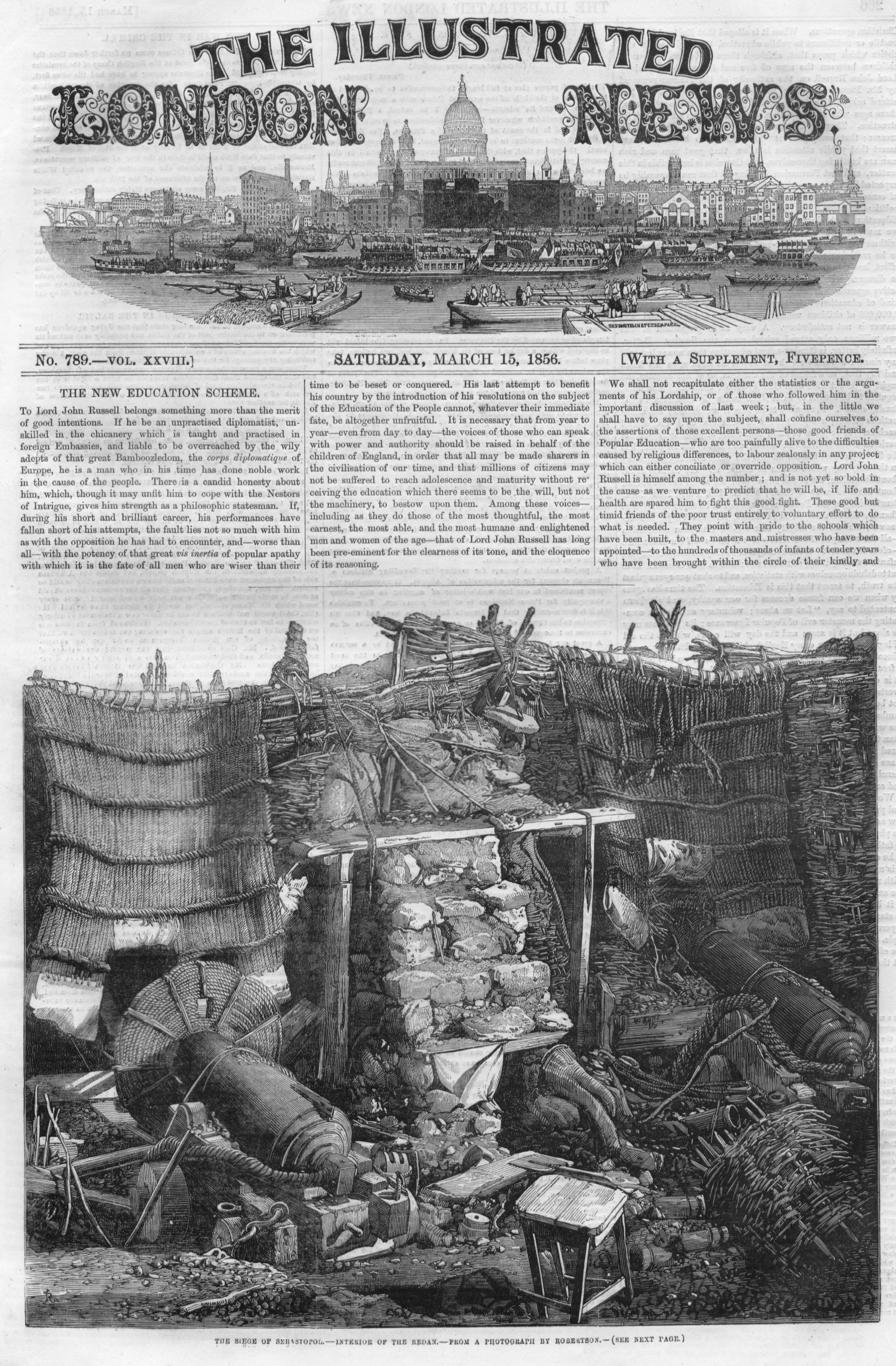
SPOT THE DIFFERENCE IN MASTHEADS
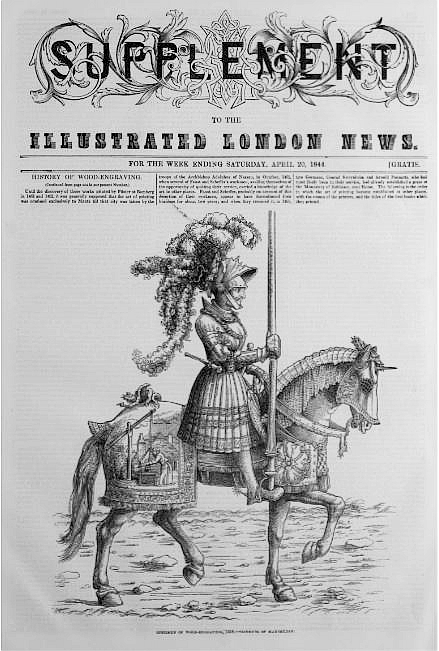
History of Wood engraving
If you would like to donate
something to
NSPCC
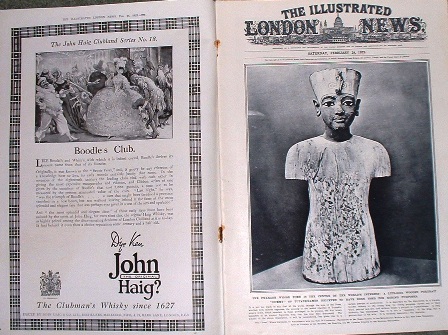
24th February 1923 Tutankhamen
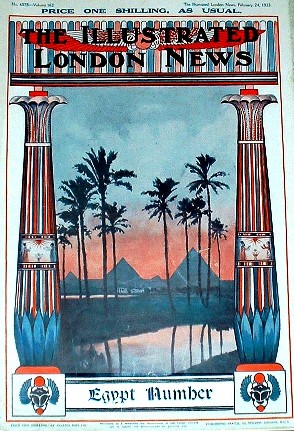
The Illustrated London News General Information
The Illustrated London News
Total Issues: 7150+
Initially founded for news and current affairs. It began to run fiction in the early 1880s, mostly serials, to rival The Graphic.
Authors include Walter Besant, Hall Caine, H. Rider Haggard, Robert Louis Stevenson, Joseph Conrad.
Frank Leslie was one of the early engravers on ILN and took the magazine concept to the US in 1848.
Circulation peaked at about 300,000 in 1860s; by 1970s was around 50,000.
Publishers
1842: Joseph Clayton
1843 – 1857: William Little
1858 – 1883: George C. Leighton
1884 – 1905: Ingram Brothers
1905 – 1961: Illustrated London News & Sketch
1961 – 1985: Thompson Organisation
1985 – 2007: Illustrated London News Group (John Sherwood)
2007 - Current Lisa Barnard
Editors
1842 – 1846: F.W.N. Bayley
1846 – 1852: John Timbs
1852 – 1859: Charles Mackay
1859 – 1890: John Lash
1891 – 1900: Clement Shorter
1900 – 1963: Bruce Ingram
1963 – 1965: Hugh Ingram
1965 – 1970: Tim Green
1967 – 1970: John Kisch
1970 – 1994: James Bishop
1995 – Mark Palmer
1996 - 2001 Alison Booth
2002 - 2003 Julia Pearey
Formats
14-May-1842 – 1970: folio (14" x 10"), heavily illustrated
1971 – present: tabloid (12" x 9")
Original Price
6d (which included 1d Tax - removed in 1855)
5d then July 6th 1872 up to 6d
where it remained until July 7th 1917 then 7d
by the beginning of 1919 it was 1/- (12d)
it was still 1/- in 1940 (inflation?)
Original Pagecounts
16pp
Frequency
weekly from 1842; monthly from May-1971;
then from Jan 1989 to Spring, Summer, Christmas and Royal editions only
Acknowledgements to Phil Stephensen-Payne for letting me use information collated by him. http://www.philsp.com/index.html
.Victorian Fiction Research Guides
Illustrated London News and its rivals -The Victorian Web
My website is very incomplete and
should only be used as a guide
to the type and breadth of the content of the ILN.
Particular subjects of enquiry
should be requested specifically
using the form below
Thank You John






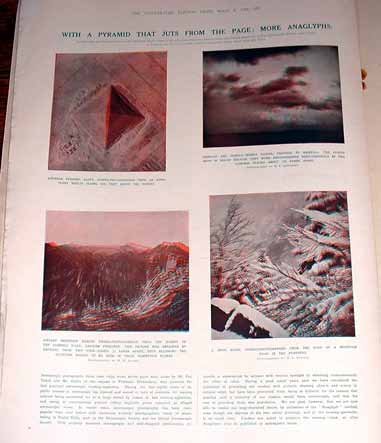
NEW The first Anaglyphs (3D pictures) in ILN